Peanuts have been part of everyday diets for generations. They are affordable, widely available, and naturally rich in energy and nutrients. From simple household use to traditional food preparations, peanuts continue to be valued not just for taste, but also for nourishment.
Although commonly referred to as nuts, peanuts are technically legumes. Despite this, their nutritional profile is very similar to tree nuts, which is why peanuts are often discussed in the context of healthy fats, plant protein, and balanced diets.
This article explains the nutrients in peanuts, calorie values by portion size, how preparation methods affect nutrition, and answers common health-related questions people search for.
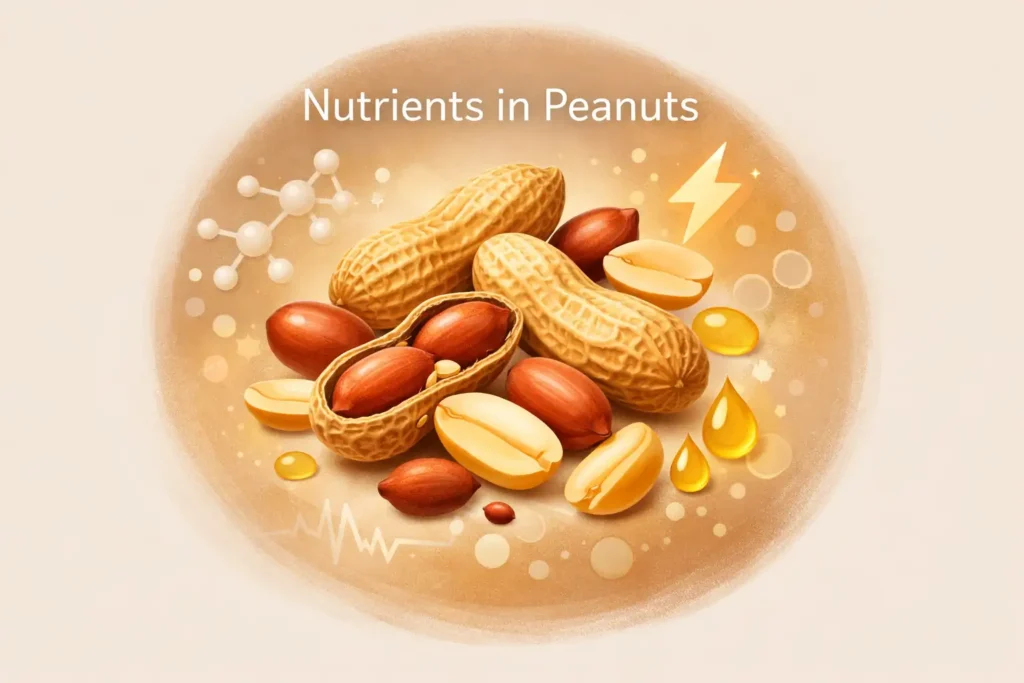
Nutrients in Peanuts: A Nutritional Overview
Peanuts are considered a nutrient-dense food, meaning they provide a wide range of essential nutrients within a relatively small quantity.
They offer a balanced combination of macronutrients and micronutrients that support daily energy needs and basic body functions.
Macronutrients in Peanuts
- Protein: Supports muscle maintenance and tissue repair
- Healthy fats: Mostly unsaturated fats that provide sustained energy
- Carbohydrates: Supply fuel for everyday activities
- Dietary fiber: Helps support digestion and satiety
Micronutrients in Peanuts
Peanuts naturally contain niacin (vitamin B3), vitamin E, folate, magnesium, phosphorus, and potassium. These nutrients play a role in metabolism, nerve function, bone health, and overall cellular activity.
Raw Peanuts Nutrition (Per 100g)
Raw peanuts are peanuts in their natural form before roasting or boiling. They retain their original nutritional structure and are commonly used as the base ingredient in traditional foods.
Approximate nutrition values for raw peanuts (100g):
| Nutrient | Amount |
|---|---|
| Calories | ~567 kcal |
| Protein | ~25–26 g |
| Total Fat | ~49 g |
| Carbohydrates | ~16 g |
| Dietary Fiber | ~8–9 g |
These values are widely accepted as standard reference data in nutrition science.
Calories in Peanuts: Understanding Portion Size
Peanuts are energy-dense, meaning even small portions contain a significant number of calories. This makes portion awareness especially important.
Calories in 100g Peanuts
A 100g serving of raw peanuts contains about 567 kcal. This measurement is mainly used for comparison and labeling rather than as a recommended daily portion.
Calories in 50g Peanuts
A 50g serving provides around 283–285 kcal. This amount is closer to what many people consume as a snack and is often used in dietary planning.
Calories in Roasted Peanuts
Roasting improves flavor, aroma, and shelf life. However, it slightly increases calorie density.
- Dry roasted peanuts (100g): ~585–590 kcal
- Oil roasted peanuts: Calorie value may increase depending on oil absorption
Roasted peanuts remain nutritious, but they are easier to overconsume due to improved taste and texture.
Calories in Boiled Peanuts
Boiled peanuts are prepared by cooking raw peanuts in water for extended periods. During boiling, peanuts absorb water, which reduces calorie concentration per 100g.
- Calories in boiled peanuts (100g): ~318–320 kcal
Boiled peanuts are often chosen for their softer texture and easier digestion.
Glycaemic Index (GI) of Peanuts
The glycaemic index (GI) measures how quickly a food raises blood sugar levels after consumption.
Peanuts have a low glycaemic index, meaning they cause a slow and gradual rise in blood sugar. This is mainly due to their combination of healthy fats, protein, and fiber, which slow digestion and glucose absorption.
Because of this low GI nature, peanuts are often considered suitable for:
- Blood sugar management
- Sustained energy release
- Diets focused on balanced carbohydrate intake
However, preparation matters. Plain, unsweetened peanuts have a much lower glycaemic impact than peanuts combined with refined sugars.
Peanut Nutrition vs Other Nuts
When compared with other commonly consumed nuts, peanuts hold their own nutritionally.
- Protein: Peanuts generally provide more protein per gram than almonds and cashews
- Healthy fats: Similar unsaturated fat profile to most tree nuts
- Calories: Comparable to other nuts, though portion size remains important
- Accessibility: Peanuts are more affordable and widely available
Because of this balance, peanuts are often used as a practical plant-based protein source, especially in traditional diets.
Peanuts in Traditional Indian Foods
In Indian food culture, peanuts are more than just a snack. Traditional preparations such as peanut chikki (kadalai mittai) use peanuts combined with natural sweeteners and time-tested methods. These foods reflect how peanuts have long been valued as an energy-rich ingredient rather than a modern processed food.
Frequently Asked Questions About Peanuts
Scientific & Nutritional References
The nutritional information in this article is supported by trusted health and nutrition authorities:
- USDA FoodData Central – Standard calorie and nutrient values
- Harvard T.H. Chan School of Public Health – Research on nuts, fats, and metabolic health
- National Institutes of Health – Vitamin and mineral information
- World Health Organization – General dietary and nutrition guidance
Learn More About Peanut Chikki
To understand how peanuts are traditionally used in Indian sweets, you may read our detailed guide:
What Is Peanut Chikki? Meaning, Making, Benefits & Why It Still Matters Today
Conclusion
Peanuts are a simple yet nutritionally rich food. They provide protein, healthy fats, fiber, and essential micronutrients that support everyday energy needs. While peanuts are calorie-dense, understanding portion sizes, preparation methods, and glycaemic impact allows them to be included thoughtfully in daily diets.
When consumed in moderation, peanuts continue to remain one of the most practical and valuable ingredients in both traditional and modern food cultures
Related Health & Nutrition Blogs
You may also find these articles helpful if you’re exploring peanuts and traditional peanut-based foods from a health perspective:
- Is Peanut Chikki Safe During Pregnancy? The Sweet Truth Every Mom-to-Be Should Know
(Focus: pregnancy nutrition, safety, portion awareness) - Top Peanut Chikki Benefits That Make It More Than Just a Sweet
(Focus: energy, traditional nutrition, balanced indulgence) - The Impact of Polyphenols in Chikki and Antioxidant-Rich Chikki on Immunity and Heart Health
(Focus: antioxidants, polyphenols, long-term health)