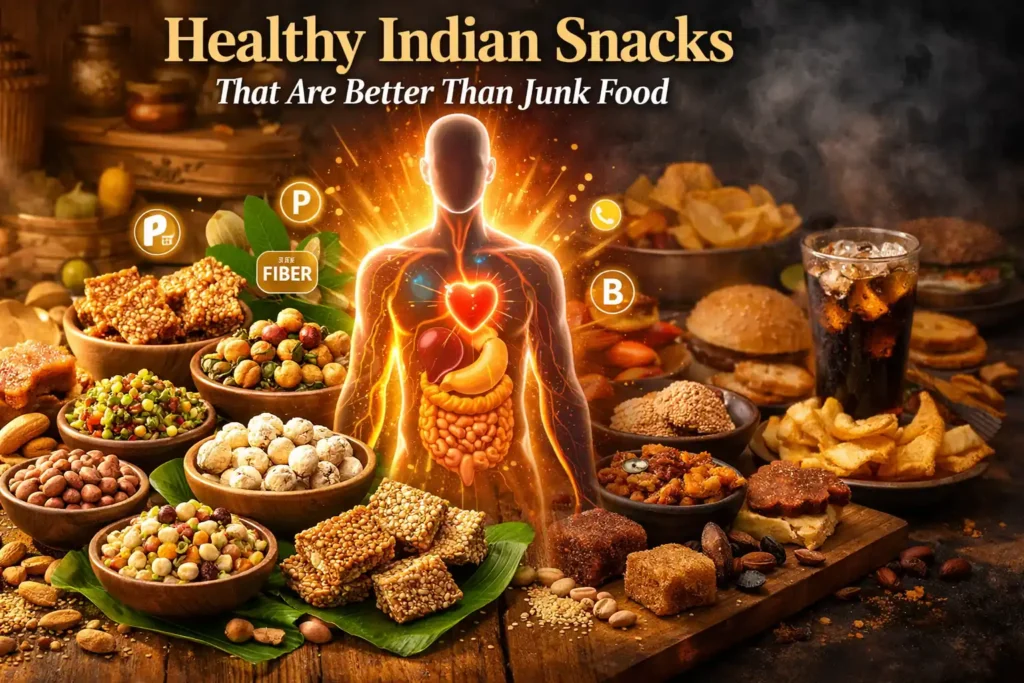
Snacking has become a regular part of modern lifestyles. Whether it’s during work breaks, study hours, or evening tea time, many people look for something quick to eat. Unfortunately, most easily available snacks today are highly processed junk foods like chips, sugary biscuits, and deep-fried items. These foods may satisfy hunger temporarily but often contain refined sugar, unhealthy oils, and artificial additives.
India already has a long tradition of nutritious snacks made with natural ingredients such as peanuts, jaggery, sesame seeds, lentils, and nuts. These traditional foods were designed to provide energy and nourishment rather than empty calories. Choosing healthy Indian snacks instead of processed junk food can help people maintain better energy levels, improve nutrition, and enjoy authentic flavors that have been part of Indian food culture for generations.
Below are some nutritious options that show why traditional healthy snacks in India can be both delicious and beneficial for everyday eating.
1. Peanut Chikki – A Traditional Energy Snack
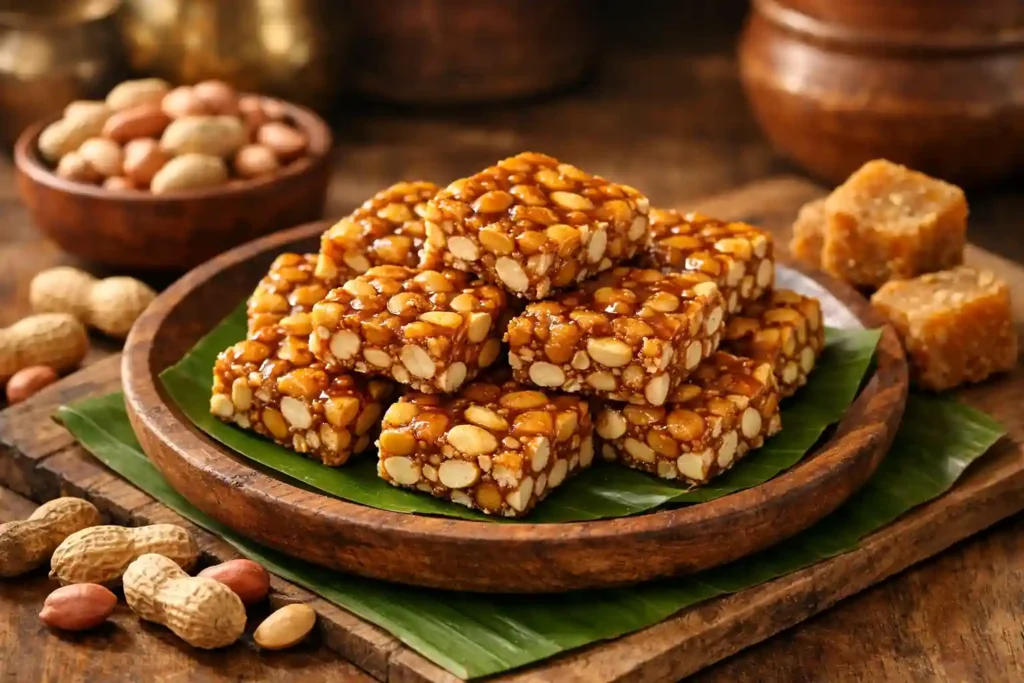
Peanut chikki is one of the most well-known healthy Indian snacks, made from roasted peanuts and jaggery. In many parts of South India it is also known as kadalai mittai, a traditional sweet loved for its crunchy texture and natural sweetness.
The combination of peanuts and jaggery provides a balanced mix of protein, natural carbohydrates, and minerals. Peanuts supply healthy fats and plant protein, while jaggery contributes iron and small amounts of micronutrients that refined sugar does not contain. Because of this nutritional balance, peanut chikki is often enjoyed as a quick energy snack for students, workers, and travelers.
Why Peanut Chikki Is Healthy
- Good source of plant protein
- Provides quick and sustained energy
- Contains minerals such as iron and magnesium
- Made with simple natural ingredients
Nutritional Value (Approx. per 100g)
| Nutrient | Amount |
|---|---|
| Energy | 480 kcal |
| Protein | 13 g |
| Carbohydrates | 58 g |
| Healthy Fats | 22 g |
| Iron | 2 mg |
| Calcium | 45 mg |
Best Time to Eat
- Evening snack
- Midday energy boost
- Travel snack
Healthy Tip
Choose chikki prepared with pure jaggery and high-quality peanuts instead of products made with refined sugar.
👉 Readers who want deeper insights can explore our internal guide on peanut chikki benefits and nutrition in our blog.
2. Sesame Chikki – A Calcium-Rich Traditional Snack
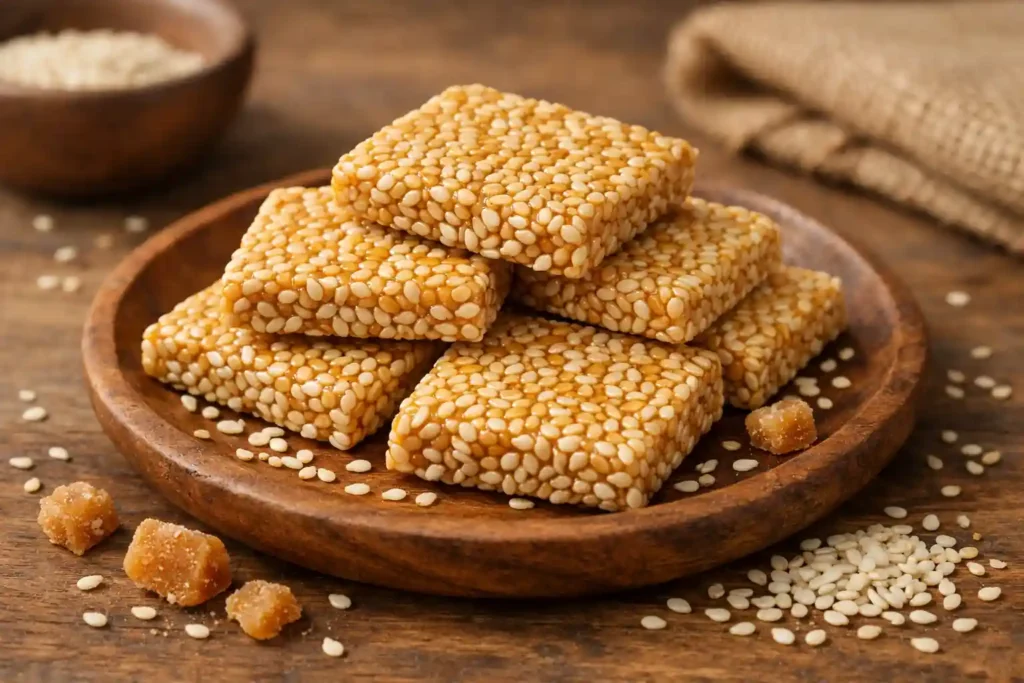
Sesame chikki is another popular option among healthy snacks in India. It is prepared using sesame seeds and jaggery, both of which offer valuable nutrients.
Sesame seeds are especially known for their high calcium and iron content, making them beneficial for bone health and overall nutrition.
Why Sesame Chikki Is Healthy
- Rich in calcium for bone strength
- Contains iron and magnesium
- Provides healthy fats
- Naturally sweetened with jaggery
Nutritional Value (Approx. per 100g)
| Nutrient | Amount |
|---|---|
| Energy | 510 kcal |
| Protein | 11 g |
| Carbohydrates | 52 g |
| Healthy Fats | 30 g |
| Calcium | 975 mg |
| Iron | 14 mg |
Best Time to Eat
- Morning snack
- Afternoon snack for sustained energy
Healthy Tip
Because sesame seeds are calorie dense, moderate portions are recommended.
3. Roasted Chana – A Simple High-Protein Snack
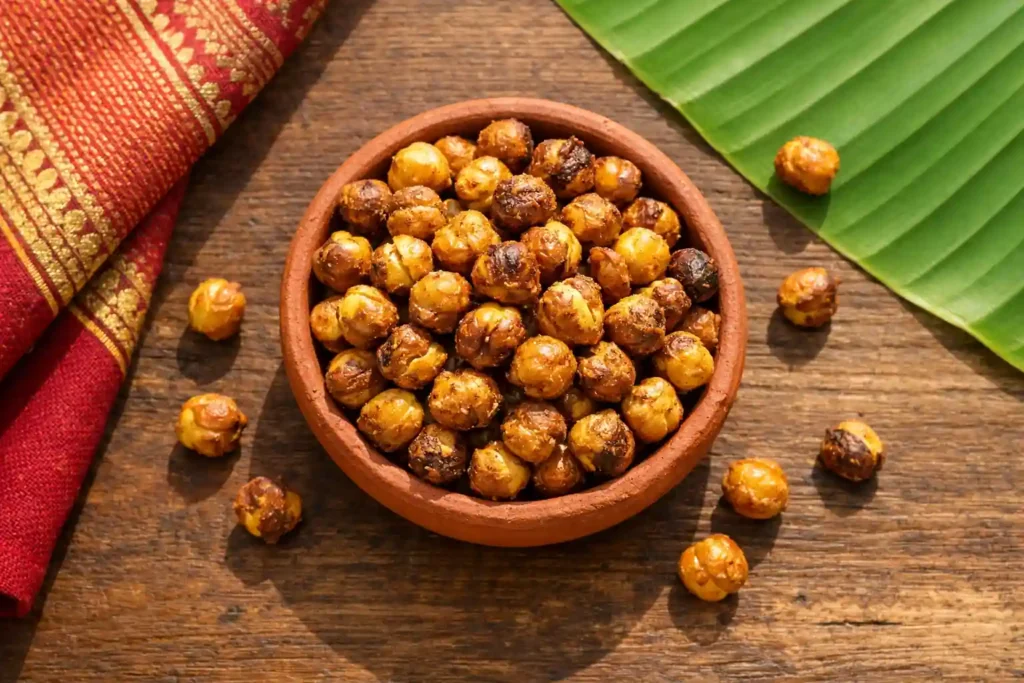
Roasted chana is a traditional snack that remains popular across India because of its simplicity and nutritional value. It is minimally processed and naturally rich in protein and fiber, making it a filling option.
Why Roasted Chana Is Healthy
- High plant protein content
- Excellent source of dietary fiber
- Helps control hunger between meals
- Low in unhealthy fats
Nutritional Value (Approx. per 100g)
| Nutrient | Amount |
|---|---|
| Energy | 364 kcal |
| Protein | 21 g |
| Carbohydrates | 60 g |
| Fat | 6 g |
| Fiber | 17 g |
| Iron | 4 mg |
Best Time to Eat
- Mid-morning snack
- Evening tea-time snack
Healthy Tip
Pair roasted chana with a few peanuts or jaggery pieces for a balanced traditional snack.
4. Sprouts Salad – A Fresh Nutrient-Dense Snack
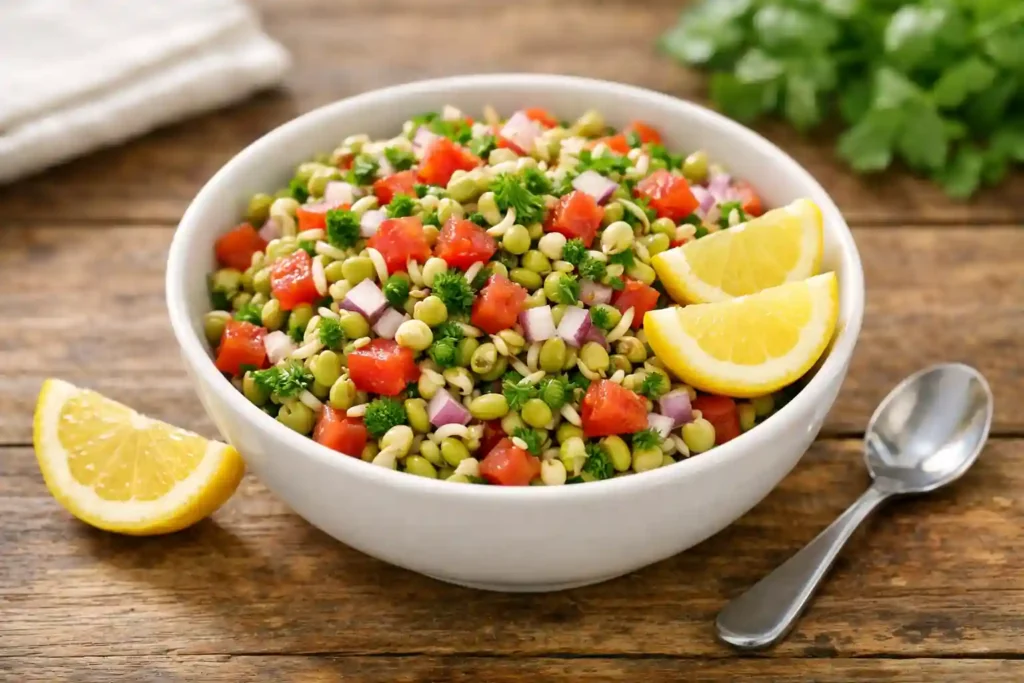
Sprouted legumes such as green gram are widely recognized as nutritious foods. Sprouting improves the availability of vitamins and enzymes, which makes sprouts easier to digest and more nutritious.
Why Sprouts Are Healthy
- Rich in plant protein
- High in vitamins and antioxidants
- Supports digestion
- Low calorie but filling
Nutritional Value (Approx. per 100g)
| Nutrient | Amount |
|---|---|
| Energy | 100 kcal |
| Protein | 7 g |
| Carbohydrates | 18 g |
| Fiber | 4 g |
| Vitamin C | High |
| Iron | 2 mg |
Best Time to Eat
- Morning snack
- Afternoon light snack
Healthy Tip
Adding lemon juice and chopped vegetables improves both flavor and nutrient absorption.
5. Boiled Peanuts – A Natural Protein Snack
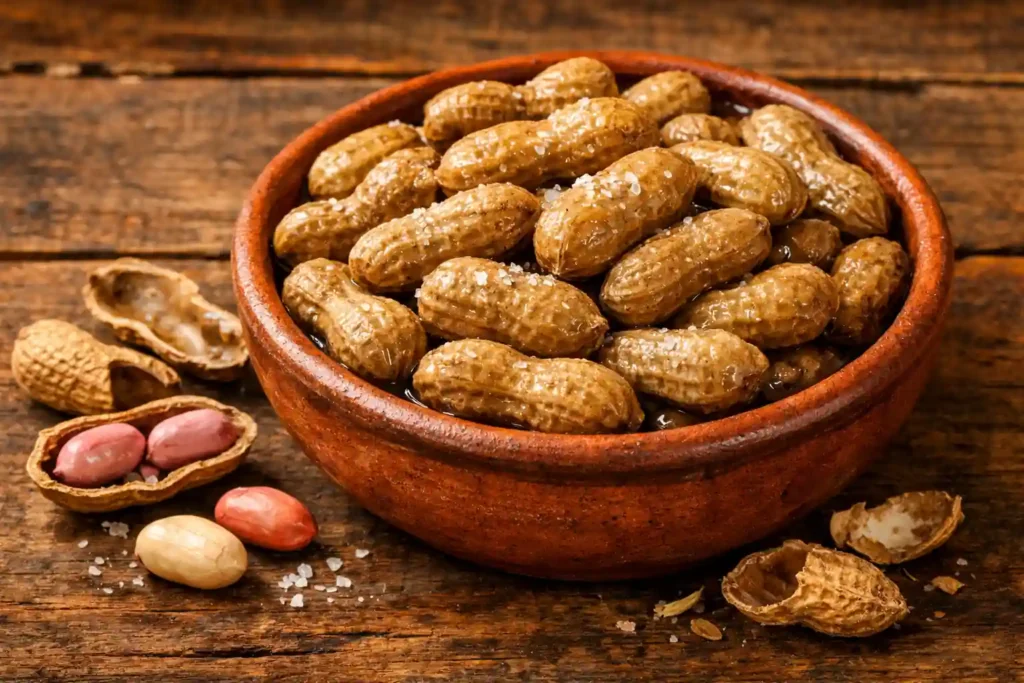
Boiled peanuts are widely enjoyed in many parts of India and are commonly sold as a street snack. They are simply prepared by boiling raw peanuts in salted water.
Why Boiled Peanuts Are Healthy
- Good source of plant protein
- Contains healthy fats
- Rich in magnesium and nutrients
- Less processed than fried snacks
Nutritional Value (Approx. per 100g)
| Nutrient | Amount |
|---|---|
| Energy | 318 kcal |
| Protein | 13 g |
| Carbohydrates | 21 g |
| Healthy Fats | 23 g |
| Fiber | 9 g |
| Magnesium | 160 mg |
Best Time to Eat
- Evening snack
- Outdoor or travel snack
Healthy Tip
Use minimal salt to keep the snack heart-friendly.
6. Dry Fruits Mix – A Nutrient-Dense Snack
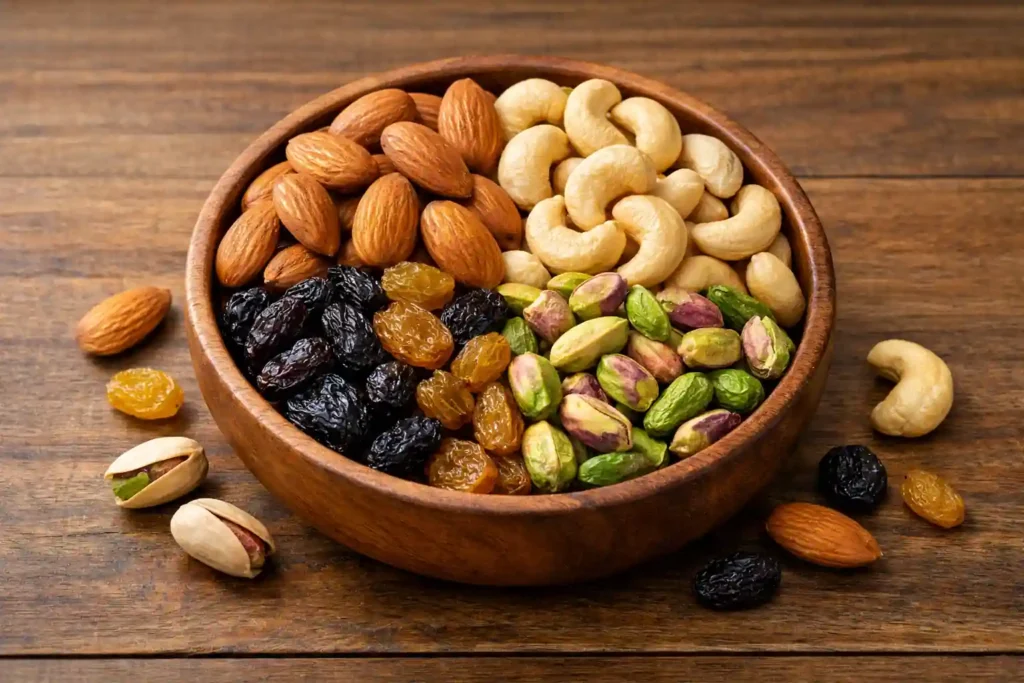
A mixture of almonds, cashews, raisins, and pistachios is a convenient snack that provides both energy and micronutrients.
Why Dry Fruits Mix Is Healthy
- Rich in antioxidants
- Provides healthy fats and protein
- Supports brain and heart health
- Contains vitamins and minerals
Nutritional Value (Approx. per 100g)
| Nutrient | Amount |
|---|---|
| Energy | 550 kcal |
| Protein | 15 g |
| Carbohydrates | 40 g |
| Healthy Fats | 40 g |
| Fiber | 8 g |
Best Time to Eat
- Morning snack
- Midday energy snack
Healthy Tip
Because dry fruits are calorie dense, small portions are recommended.
7. Sundal – A Traditional Protein Snack
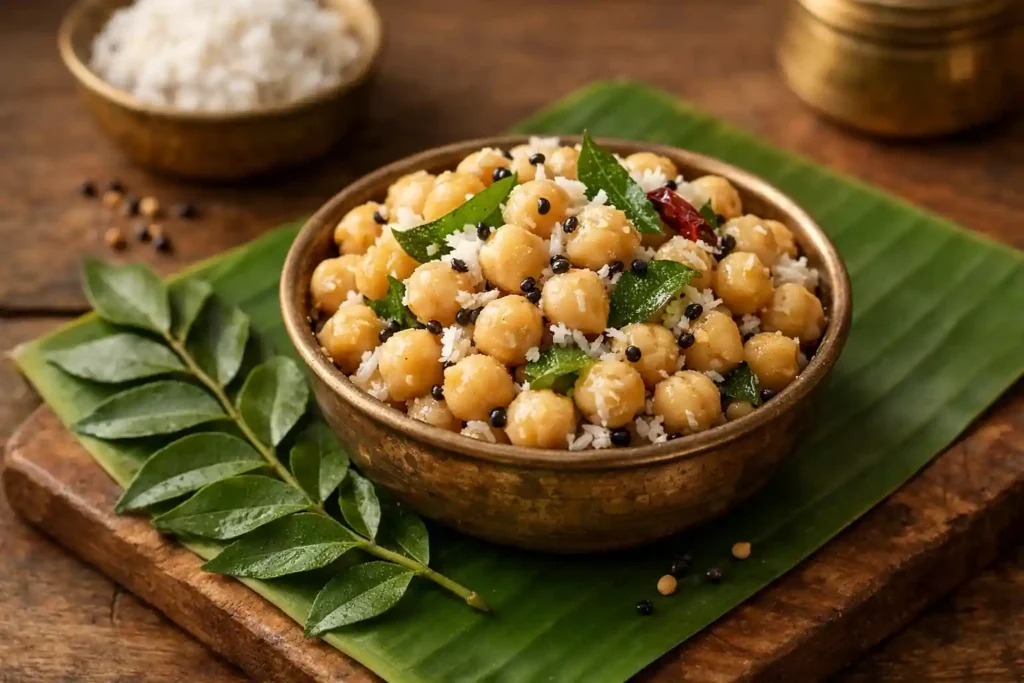
Sundal is a South Indian snack made using boiled chickpeas or other legumes, often prepared with coconut and spices.
Why Sundal Is Healthy
- High in plant protein
- Rich in fiber
- Contains essential minerals
- Light yet filling snack
Nutritional Value (Approx. per 100g)
| Nutrient | Amount |
|---|---|
| Energy | 160 kcal |
| Protein | 8 g |
| Carbohydrates | 27 g |
| Fat | 2 g |
| Fiber | 7 g |
Best Time to Eat
- Evening snack
- Festival or light meal snack
Healthy Tip
Adding grated coconut enhances both taste and nutrition.
8. Makhana (Fox Nuts) – A Light and Crunchy Healthy Snack
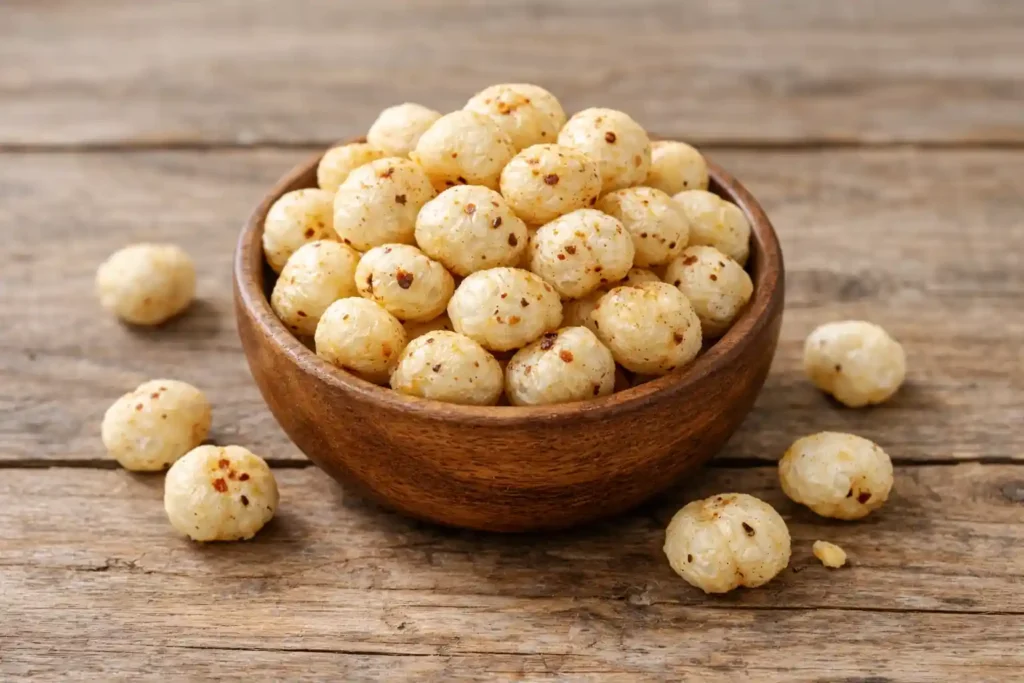
Makhana, also known as fox nuts or lotus seeds, has recently become popular among healthy snacks in India because of its light texture and impressive nutritional value. It is usually roasted with a small amount of ghee or spices, making it a crunchy and satisfying snack.
Unlike many fried snacks, makhana is naturally low in fat and rich in antioxidants. It also contains important minerals like magnesium and calcium, which support bone health and overall wellness. Because of its light nature, makhana is often recommended as a snack for people who prefer low-calorie yet nutritious options.
Why Makhana Is Healthy
- Low in fat and calories
- Good source of antioxidants
- Contains magnesium and calcium
- Supports heart health
Nutritional Value (Approx. per 100g)
| Nutrient | Amount |
|---|---|
| Energy | 347 kcal |
| Protein | 9.7 g |
| Carbohydrates | 76 g |
| Fat | 0.1 g |
| Calcium | 60 mg |
| Magnesium | 67 mg |
Best Time to Eat
- Evening snack
- Light snack between meals
Healthy Tip
Dry roast makhana with a small amount of ghee and mild spices to enhance flavor while keeping the snack healthy.
9. Poha Chivda – A Light Traditional Snack
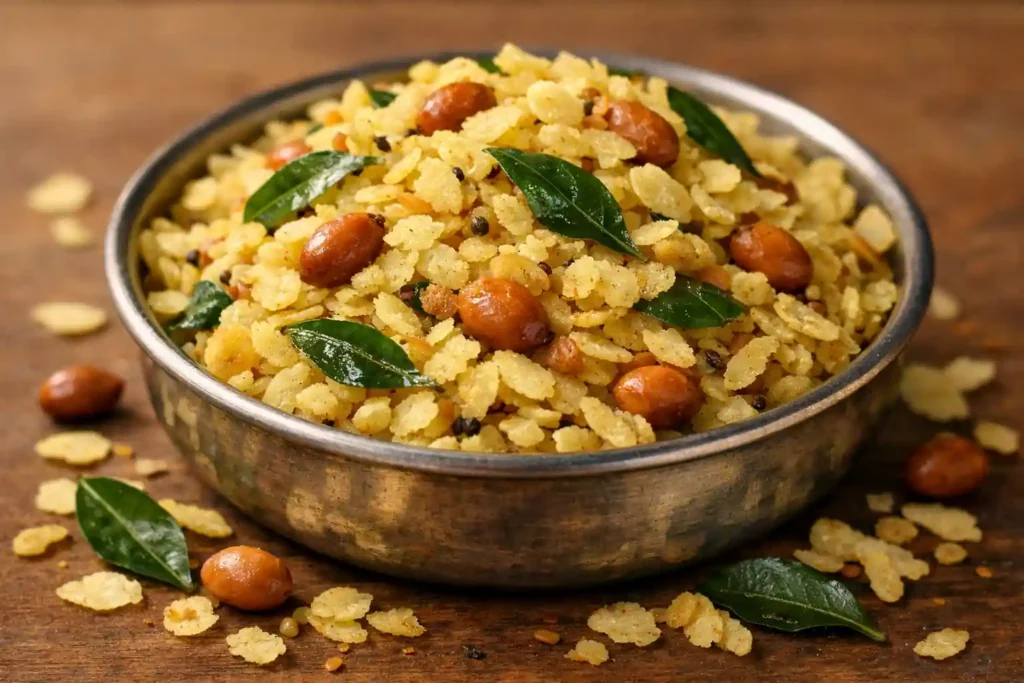
Poha chivda is a traditional snack made from flattened rice (poha) roasted with peanuts, curry leaves, and mild spices. It is widely enjoyed across India because of its light and crunchy texture.
Compared to deep-fried snacks, poha chivda is relatively lighter and can provide quick carbohydrates for energy along with nutrients from peanuts and spices. When prepared with minimal oil, it becomes a good option among traditional healthy Indian snacks.
Why Poha Chivda Is Healthy
- Light and easy to digest
- Provides quick energy from carbohydrates
- Contains peanuts for protein
- Lower fat compared to fried snacks
Nutritional Value (Approx. per 100g)
| Nutrient | Amount |
|---|---|
| Energy | 400 kcal |
| Protein | 7 g |
| Carbohydrates | 70 g |
| Fat | 10 g |
| Fiber | 5 g |
| Iron | 3 mg |
Best Time to Eat
- Midday snack
- Evening tea-time snack
Healthy Tip
Prepare poha chivda using minimal oil and natural ingredients to maintain its nutritional value.
Why Traditional Snacks Are a Better Choice
Traditional foods are often prepared using natural ingredients and simple cooking methods, which makes them nutritionally better than many packaged snacks.
Key advantages of choosing traditional healthy snacks in India include:
- Minimal artificial additives
- Balanced nutrition from natural ingredients
- Better source of protein, minerals, and fiber
- Long-lasting energy compared to processed foods
Many of these snacks are still prepared by experienced sweet makers and traditional chikki manufacturers who continue to follow authentic preparation methods that preserve both taste and quality.
Final Thoughts
Healthy snacking does not mean avoiding snacks completely-it simply means choosing foods that provide real nutrition instead of empty calories. Traditional foods such as peanut chikki, sesame chikki, roasted chana, sprouts, boiled peanuts, sundal, and dry fruits demonstrate how healthy Indian snacks can easily replace modern junk food.
By choosing these traditional options, people can enjoy flavorful snacks while also benefiting from natural ingredients and balanced nutrition. These foods represent the richness of India’s culinary heritage and continue to offer a practical way to maintain healthier eating habits.
References
Nutritional information referenced from:
- Indian Food Composition Tables (IFCT) – National Institute of Nutrition
https://www.nin.res.in - USDA FoodData Central
https://fdc.nal.usda.gov - Dietary Guidelines for Indians – National Institute of Nutrition
https://www.nin.res.in/dietaryguidelines - Peanut Institute – Nutrition Research
https://www.peanutinstitute.com - Sesame Seed Nutrition Research – USDA Food Studies
https://fdc.nal.usda.gov/fdc-app.html#/food-details/170567/nutrients