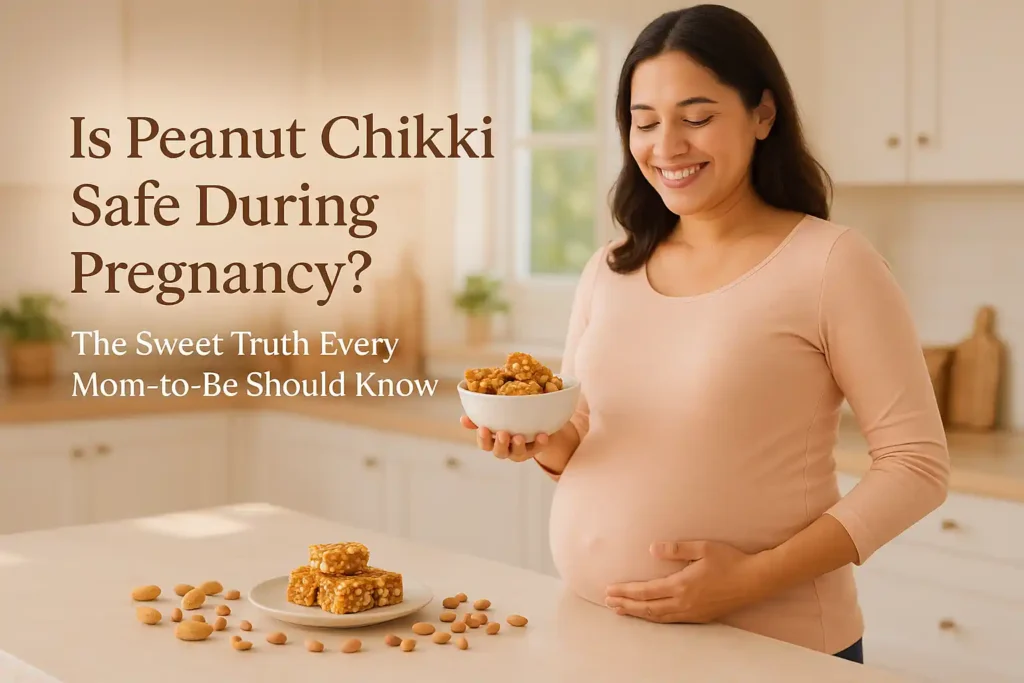
Pregnancy comes with a whole new to-do list: prenatal vitamins, food checks, and endless questions about what’s safe to eat. One snack that often raises eyebrows is peanut chikki during pregnancy. Can moms-to-be actually enjoy that crunchy, jaggery-laced bite without worry? Let’s dig in (pun intended) and find out the sweet truth every expecting mom should know.
1. What Is Peanut Chikki (And What Makes It Different?)
Peanut chikki (also called kadalai mittai, gur badam chikki, or simply “nut brittle”) is a traditional Indian sweet made by combining peanuts and jaggery (or sometimes sugar) into a hard, crunchy bar.
Because peanuts are embedded in solidified jaggery, peanut chikki is denser in calories and sweetness than plain roasted peanuts. This difference affects how the body digests it, especially during sensitive stages like pregnancy, where portion size and ingredient quality matter more than ever.
For expectant mothers, it helps to understand peanut chikki beyond just pregnancy safety — including how it is traditionally prepared, why peanuts and jaggery are used together, how quality varies, and how it fits into everyday eating across age groups. We’ve covered this broader perspective in detail in our guide on What Is Peanut Chikki? Meaning, Making, Benefits & Why It Still Matters Today, which explains the topic from basics to practical use.
2. Nutrition Snapshot: Why Peanuts Are Usually a Good Pregnancy Food
Before we talk chikki specifically, here’s what makes peanut-based foods a smart pick – assuming no allergy:
- Protein & healthy fats: Peanuts are rich in plant protein (≈22–30%) and monounsaturated/polyunsaturated fats.
- Folate (Vitamin B9): Folate is crucial in early pregnancy to prevent neural tube defects. Peanuts contribute a bit of folate.
- Vitamins & minerals: Peanuts provide niacin (B3), vitamin E, magnesium, copper, manganese, phosphorus, and more.
- Fiber: Helps with digestion and reducing constipation (a common pregnancy woe)
- Cognitive/neurological development support: Some studies show mothers who eat nuts during the first trimester may have children with better memory, attention, and IQ.
So, peanut chikki during pregnancy—if made healthily-can deliver many of those same benefits (with some caveats).
3. Peanut Chikki During Pregnancy: Pros & Precautions
✅ Potential Benefits
- Boosted nutrient intake: You gain the nutrients of peanuts plus a bit more energy (from the jaggery) — useful when extra calories are needed.
- Sweet satisfaction, less guilt: If cravings strike, chikki might be a better alternative to less wholesome sweets.
- Cultural comfort: In many Indian households, traditional snacks are trusted. That psychological comfort matters.
- Allergy prevention (emerging evidence): Older guidelines once urged mothers to avoid peanuts. Today, evidence suggests maternal peanut consumption doesn’t increase peanut allergy risk in babies – it might even reduce it.
⚠️ Important Precautions
- Allergy risk: If you (or your close family) have a peanut allergy, steer clear.
- High sugar & calorie load: Chikki often has a lot of jaggery (or sugar), which can spike calories — be cautious, especially if you have gestational diabetes or weight concerns.
- Aflatoxin contamination: Peanuts can get moldy, producing toxins harmful to health. Always use high-quality, well-tested peanuts.
- Dental/chewing issues: The hard texture might strain teeth or gums, especially if you’re sensitive.
- Overdoing it: Too much of anything becomes a problem.
4. Peanut Chikki in the First Trimester: What to Watch Out For
The first trimester is especially delicate. Here’s what to keep in mind:
- Morning sickness & digestion: You may feel nauseous or have digestion issues. If the hard chikki is tough to chew, go slow or avoid in that period.
- Allergy sensitivity: Some mothers get new food sensitivities early in pregnancy. Monitor reactions.
- Folate timing: This is when folate is most critical. Chikki can contribute, but don’t rely on it solely. Supplements and leafy greens are essential.
- Moderation is key: A thin sliver or small piece may suffice – you don’t need big chunks.
5. Uses, Serving Tips & How Much Is Wise
Uses in a Pregnancy Diet
- Snack between meals: A small piece (say 10–15 g) can tide you over until the next meal.
- Mix into porridge: Crumble a bit of chikki over warm millet, oats, or ragi for texture + nutrition.
- Energy booster: If you feel low in midday, a piece with tea (without excess sugar) can perk you up.
Serving Tips / Best Practices
- Pair with fresh fruit or curd to balance sugar and aid digestion.
- Drink plenty of water-high-fiber + sweet adds load to your digestion.
- Opt for thin, small pieces rather than thick slabs.
- Store chikki in airtight containers to keep moisture out, reducing mold risk.
How Much Is “Safe”?
One or two small pieces (≈10–20 g) a day is reasonable for many, but this depends on your calorie needs, weight goals, blood sugar, and overall diet. Always check with your obstetrician or nutritionist.
6. When You Should Avoid Peanut Chikki
- If you have a diagnosed peanut/tree-nut allergy (no exceptions).
- Active gestational diabetes — high-sugar snacks may disrupt control.
- If your doctor or dietician instructs a low-sugar or restricted-calorie diet.
- If you notice digestive discomfort, heartburn, or oral sensitivity after eating it.
8. Final Word & Caution
In short: Yes – peanut chikki during pregnancy can be safe and even beneficial if you follow precautions: use good-quality ingredients, eat small portions, monitor your sugar and allergy status, and blend it into a balanced diet.
Choose trusted peanut chikki manufacturers who prioritize hygiene and quality. And if you’re craving that perfect mix of taste and nutrition, you can explore the peanut chikki from RudrasFoods, crafted using premium peanuts and pure jaggery for natural energy.
But remember, it doesn’t replace prenatal vitamins or prescribed nutrition advice – it complements them. Always check with your OB/GYN or a prenatal nutritionist before making it a regular snack.
🩺 Sources & References
- Healthline – Peanuts: Nutrition, Benefits, and Possible Downsides
- Healthline – Peanuts During Pregnancy: Are They Safe?
- WebMD – Peanuts and Pregnancy: What You Should Know
- News-Medical.net – Benefits of Nut Consumption During Pregnancy
- TATA AIG Knowledge Center – Peanuts During Pregnancy: Is It Safe?
7. Related Reads: Our Chikki Recipes & Benefits Blogs
- 👉 How to Make Peanut Chikki — Step-by-step recipe showing how this traditional snack is made naturally with jaggery.
- 👉 Peanut Chikki Benefits — Discover why this crunchy delight is more than just a sweet treat.
- 👉 History of Kadalai Mittai in Tamil Nadu — Explore the cultural roots and traditional significance of this beloved sweet across generations.
- 👉 Evolution of Peanut Chikki in India — Learn how this simple jaggery-based snack transformed over time while preserving its authentic taste.