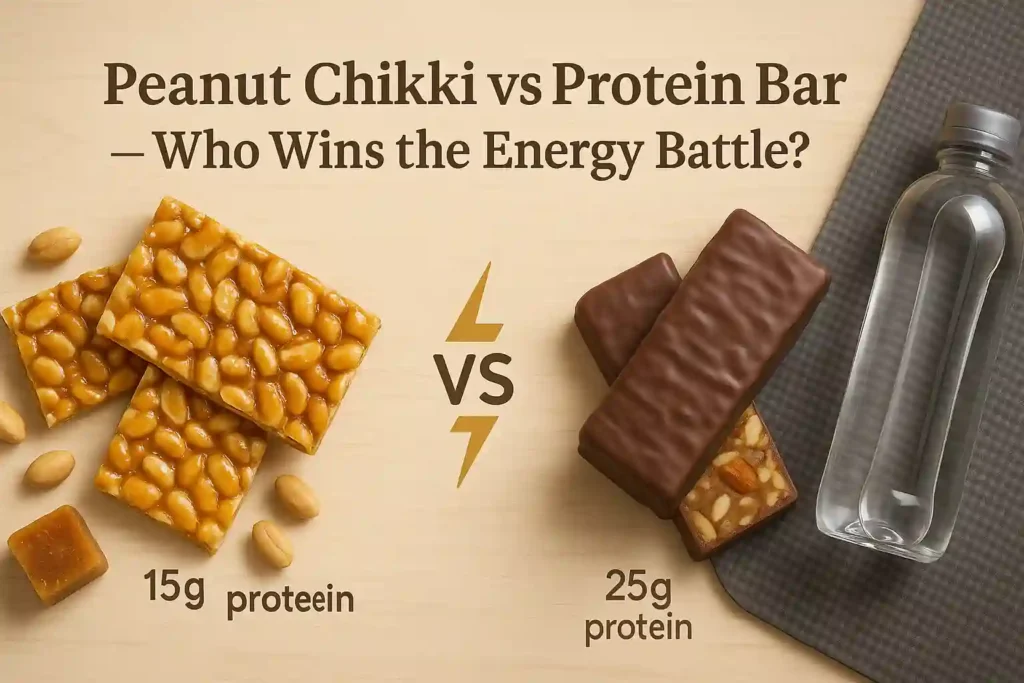
In today’s world of protein powders, gym shakes, and fancy bars, one humble Indian snack still stands strong – Peanut Chikki.
It doesn’t need glossy packaging or celebrity endorsements. Just two ingredients – peanuts and jaggery — yet it gives you the kind of energy most protein bars claim to deliver.
So let’s settle the debate once and for all: Peanut Chikki vs Protein Bar – who really wins the energy battle?
1. Nutritional Face-Off: Protein, Calories & Real Energy
Both snacks promise strength, but what’s really inside?
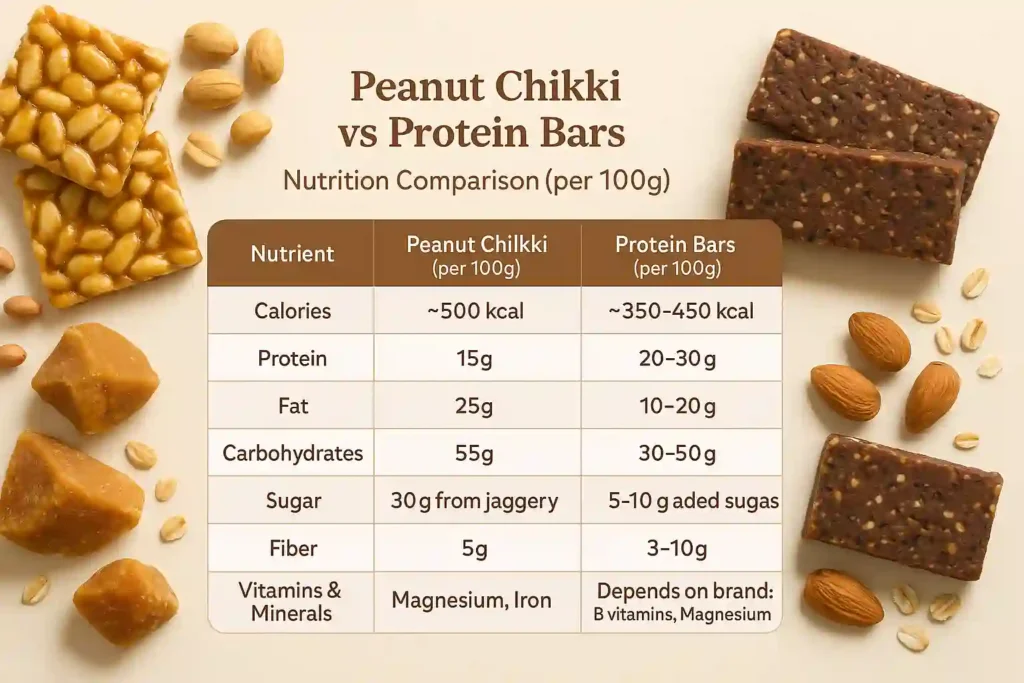
| Snack Type | Protein (per 100g) | Calories | Sugar Type | Additives |
|---|---|---|---|---|
| Peanut Chikki | ~18g | ~470 kcal | Natural jaggery | None |
| Protein Bar | 20–25g | 400–450 kcal | Added sugar / artificial | Preservatives |
When it comes to protein count, the difference isn’t massive.
But here’s where things change – the source of energy.
Peanut Chikki fuels you with natural proteins and minerals, while most protein bars carry artificial sweeteners and emulsifiers to extend shelf life.
So if you’re chasing real energy instead of synthetic buzz, the old-school Peanut Chikki already scores a point.
To make a fair comparison, it also helps to understand peanut chikki beyond numbers. Knowing what peanut chikki is, how it is traditionally made using peanuts and jaggery, and how it fits into everyday eating gives better context when comparing it with modern protein bars designed mainly for gym-focused nutrition.
If you’d like a clearer, complete explanation from the basic meaning of peanut chikki to its preparation, nutritional role, and everyday use – we’ve covered this in detail in our guide on what peanut chikki is and how it differs from modern snack bars.
💡 Keyword Note: Peanut chikki calories and protein bar calories are almost the same – but the natural nutrient value in peanuts and jaggery gives chikki the advantage.
2. Ingredient Check — What Are You Really Eating?
Let’s get real — ingredients decide the winner.
Peanut Chikki Ingredients:
Peanuts, jaggery, and love (okay, the last one isn’t on the label – but it’s there).
That’s it. No confusion, no preservatives, no artificial flavor.
Protein Bar Ingredients:
Protein isolate, glucose syrup, sugar alcohols, stabilizers, cocoa solids, artificial flavors, and a chemistry textbook worth of extras.
When you compare peanut chikki ingredients with protein bar ingredients, the difference is pure honesty.
Chikki is simple and transparent — a snack that your body recognizes, digests easily, and converts into sustained energy.
“In the ingredient war, Peanut Chikki wins the purity trophy – two ingredients, zero complications.”
3. Health Impact — Natural Energy vs Synthetic Boost
Now let’s talk benefits – what happens after you eat them?
Peanut Chikki Health Benefits:
- Great source of natural protein and healthy fats.
- Jaggery adds iron, calcium, and essential minerals.
- Provides a steady energy release, not a sugar crash.
- Aids digestion and boosts immunity naturally.
Protein Bars:
- High protein, yes – but often with added sugar or artificial sweeteners.
- Can cause bloating or acidity for some due to processed ingredients.
- Not ideal for daily snacking unless you’re working out heavily.
So when you think of everyday health, peanut chikki health benefits clearly outweigh the hype of packaged bars.
It’s your everyday energy booster – minus the guilt.
4. Taste, Texture & Satisfaction – The Crunch Test
Let’s be honest — taste matters.
A peanut chikki bar cracks with joy; it’s crunchy, sweet, and nostalgic.
A protein bar, meanwhile, often tastes like gym chalk that someone tried to sweeten.
There’s something addictive about that perfect crack sound when you break a chikki.
And it satisfies both your sweet tooth and your energy need in one bite.
“One gives you protein. The other gives you protein and happiness.”
5. Price & Practicality — Which Snack Makes More Sense?
A 100g peanut chikki bar costs a fraction of what most protein bars do.
Yet the protein difference is just 2–3g – and that’s before you count the natural minerals chikki provides.
Let’s say it straight – real energy doesn’t come from a lab, it comes from clean food.
As a leading peanut chikki manufacturer, we’ve seen professionals, athletes, and parents switch back to this classic because it’s affordable, natural, and made with trust.
For convenience, our peanut chikki jars are perfect for travel, office snacking, or gifting.
6. The Cultural Edge — Why Peanut Chikki Still Rules Indian Hearts
Every winter, Indian homes fill with the sound of chikki being made – peanuts roasted, jaggery bubbling, memories forming.
From Makar Sankranti to long train rides, peanut chikki has always been more than a snack — it’s part of India’s heartbeat.
And that’s something no protein bar can replicate.
Want to explore more?
👉 Read our related posts:
7. Verdict – Who Wins the Energy Battle?
If you want clean energy, honest ingredients, and a touch of nostalgia – Peanut Chikki wins hands down.
Protein bars have their moment, especially for athletes. But for real-world professionals, travellers, and everyday snackers, peanut chikki vs protein bar isn’t even a fair fight.
Peanut chikki delivers protein, energy, minerals, and comfort — naturally.
“In the battle of modern vs traditional, the winner is the one made in your kitchen, not a factory.”
Final Thought
Whether you’re crunching on a piece after lunch or grabbing one before your workout, peanut chikki isn’t just a snack – it’s smart energy wrapped in tradition.
And if you’re looking for authentic, freshly made chikkis, check out a trusted chikki manufacturerr like us – where purity and crunch meet every bite.
❓ FAQs
1. Is peanut chikki healthier than protein bars?
Yes. Peanut chikki is made from natural ingredients like peanuts and jaggery, offering protein, minerals, and energy without artificial additives.
2. How many calories are in peanut chikki?
On average, peanut chikki calories are around 470 kcal per 100g – similar to protein bars but from natural sources.
3. What is the protein content in peanut chikki?
Peanut chikki proteins are around 18g per 100g, mainly from roasted peanuts — a natural and balanced source.
4. Can I replace protein bars with peanut chikki?
Absolutely. If you’re not a heavy athlete, peanut chikki bar is a great replacement – it offers clean energy and is easier on digestion.
5. Are protein bars safe for daily use?
They’re fine occasionally but check the protein bar ingredients – many contain added sugar and preservatives. Peanut chikki is safer for regular snacking.