1. The Sweet That Became a Health Revolution
If you think peanut chikki belongs only on festive plates, think again. This classic Indian snack — made from peanuts, jaggery, and a touch of ghee – is now trending as a healthy snack loved by the new generation.
The beauty lies in its simplicity. No artificial colors, no preservatives, no unpronounceable chemicals – just pure ingredients and timeless technique. Nutritionists today even call it an ancient super snack because of how perfectly it fits modern health goals: clean energy, plant protein, and essential minerals in one crunchy bite.
If you’ve already explored our post From Tradition to Innovation: The Evolution of Peanut Chikki in India, you’ll know how this humble treat has adapted to modern demands while keeping its traditional heart intact.
2. Why Health Experts Are Talking About Peanut Chikki
Let’s cut through the sugar coating – literally. Peanut chikki isn’t candy; it’s a compact energy source with a balanced nutrient profile, now being celebrated as one of India’s most underrated healthy snacks.
Nutritional facts (approx. per 100 g):
- Protein: 16–18 g
- Iron: 5–6 mg
- Calories: 520–540 kcal
- Healthy fats: 40–45 % from peanuts
- Carbohydrates: 35–40 %, mostly from jaggery
That means it delivers clean, steady energy – perfect as a pre-workout or office snack.
Jaggery, unlike refined sugar, retains minerals such as iron and magnesium, while peanuts add Vitamin E, niacin, and antioxidants. Together, they offer energy, immunity, and heart-friendly nutrition that most processed snacks can’t match.
Understanding why health experts speak positively about peanut chikki also depends on knowing the food beyond its nutrition numbers. Factors like how peanut chikki is traditionally made, why peanuts and jaggery are used together, and how it fits into everyday eating habits all play a role in its modern reputation as a healthy snack.
For readers who want a complete, foundational understanding — from what peanut chikki is to how it is prepared, consumed, and judged for quality — we’ve explained this clearly in our detailed guide on what peanut chikki is and how it fits into daily diets.
3. From Temple Prasad to Gym Snack
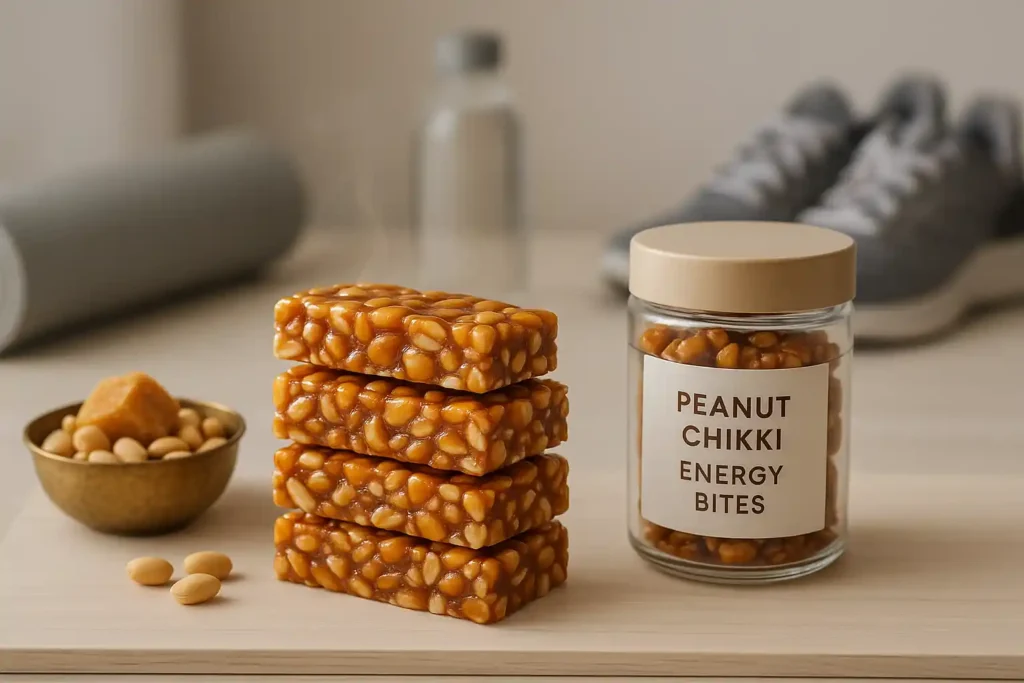
It’s fascinating how the same peanut chikki once offered as prasad in temples or as a winter treat during Makar Sankranti is now seen beside yoga mats and gym bottles.
Fitness-focused consumers are replacing chemical-filled bars with healthy snacks rooted in heritage – foods that fuel the body naturally. Peanut chikki fits that shift beautifully.
Nutrition coaches often recommend it as:
- A pre-workout booster for quick, sustained energy
- A midday work snack that beats fatigue
- A post-meal bite that satisfies sweetness cravings without heavy sugar spikes
4. Peanut Chikki During Pregnancy – A Natural Source of Strength
During pregnancy, natural sources of protein and iron matter more than supplements alone. Moderate intake of peanut chikki can help improve hemoglobin levels and sustain energy because of its jaggery-iron combo and plant-based protein.
We’ve discussed this further in Peanut Chikki During Pregnancy – Benefits & Cautions, where we explore how it supports maternal nutrition and digestion.
Just ensure it’s from a verified, hygienic maker – not the overly sticky, sugar-loaded roadside versions.
5. Reinventing Chikki: How Factories Are Modernizing the Classic Snack
Behind the rise of this healthy snack is innovation done right. Traditional home methods have evolved into semi-automated peanut chikki lines that ensure hygiene, precision, and consistency.
Modern traditional peanut chikki factories like Rudras preserve the age-old roasting and rolling process but upgrade safety and packaging through stainless-steel machinery, vacuum sealing, and food-grade materials.
This blend of tradition and technology is what helps peanut chikki compete confidently with granola bars and protein bites on modern health shelves.
6. How It Compares to Modern Protein Snacks
| Criteria | Peanut Chikki | Protein Bar |
|---|---|---|
| Protein source | Plant-based (peanuts) | Whey / soy / isolates |
| Sweetener | Natural jaggery | Artificial or refined sugar |
| Additives | None / minimal | Flavorings, stabilizers |
| Shelf life | 3–6 months | 6–12 months |
| Digestibility | Light and easy | Often dense or processed |
Protein bars may boast higher protein content, but chikki wins on natural ingredients and easy digestibility – a healthy snack made from the simplest of foods.
7. Why Rudras Chikki Is Trusted by Health-Conscious Consumers
If you’re searching for the best peanut chikki manufacturer, Rudras deserves your attention.
Rudrasfoods crafts each bar with farm-fresh peanuts, pure jaggery, and modern food safety standards – ensuring every piece carries the traditional crunch with zero preservatives. Whether you’re a retailer, fitness café, or individual consumer, Rudras brings health and heritage together in every bite.
8. How to Add Peanut Chikki to Your Daily Diet
Here are smart, easy ways to enjoy this healthy snack every day:
- Pair a piece with your morning black coffee for a satisfying start.
- Keep a pack handy for post-workout recovery.
- Add crushed chikki over yogurt or oats for texture and flavor.
- Share it during festivals as a guilt-free, wholesome treat.
Its clean ingredients and portability make it a go-to choice for working professionals and travelers alike.
10. Final Crunch: Tradition That Fuels the Future
Peanut chikki’s transformation from a festive treat to a healthy snack highlights India’s gift for reinvention. Every bite delivers both nostalgia and nourishment — proof that traditional recipes can stay timeless when made with care.
With brands like Rudrasfoods carrying forward that legacy through innovation and purity, this crunchy delight is more than just a sweet – it’s fuel for the modern, mindful lifestyle.