Traditional chikki has regained strong demand in recent years as people look for simple, ingredient-based sweets rooted in tradition. At the same time, the market is now filled with many chikki brands, each claiming quality, purity, and authenticity. For buyers-whether households, retailers, or bulk purchasers-this creates a genuine challenge: how do you identify a chikki brand you can truly trust?
Not all chikki tastes the same, and more importantly, not all chikki is made the same way. Understanding what goes into chikki, how it is prepared, and how different brands operate helps buyers make informed decisions instead of relying only on price or appearance.
This guide is written to help readers understand what really matters when choosing a chikki brand for both wholesale and individual orders.
Understanding Who Buys Chikki Today
A reliable chikki brand does not serve just one type of buyer. Today’s chikki consumers fall into multiple categories:
- Individual households buying for daily or occasional consumption
- Retail shop owners looking for consistent quality and shelf stability
- Bulk and wholesale buyers supplying multiple outlets or regions
- Event and gifting buyers who value presentation along with taste
Each buyer has different expectations, but the core requirement remains the same – consistent quality and honest ingredients. A dependable chikki brand understands both small and bulk needs without changing its fundamental standards.
Ingredient Transparency: How to Identify Quality Chikki Without Lab Tests
One of the simplest ways to judge a chikki brand is by observing the ingredients through your senses. Even without laboratory testing, buyers can learn a lot.
How Good Jaggery Should Smell
Quality jaggery has a warm, earthy, caramel-like aroma. It should not smell chemical, sour, or burnt. Smell is often a more reliable indicator than color, because jaggery shades naturally vary based on region and season.
How Properly Roasted Peanuts Look
Well-roasted peanuts appear evenly golden, not dark brown or black. Over-roasting introduces bitterness and can affect digestion. Uneven coloring often indicates rushed or poorly controlled roasting.
Why Overly Shiny Chikki Is a Red Flag
Traditional jaggery chikki has a natural matte finish. Excessive shine usually indicates added sugar syrup or glucose. Shine may look attractive, but it often signals shortcuts rather than quality.
This kind of awareness helps buyers feel educated and confident, not dependent on marketing claims.
Jaggery vs Sugar vs Glucose Syrup in Chikki
Many blogs avoid this topic, but it is central to understanding quality differences between chikki brands.
Why Jaggery Behaves Differently During Binding
Jaggery is temperature-sensitive and requires precise timing. Small changes in heat can alter texture. This makes jaggery chikki more skill-dependent, with natural batch-to-batch variation.
Shelf-Life Tradeoffs
- Jaggery chikki has a moderate, natural shelf life
- Sugar and glucose syrups extend shelf life but reduce nutritional value
Longer shelf life often comes from processing, not purity.
Cost Reality: Why Cheap Chikki Exists
Lower prices usually reflect:
- Cheaper sweeteners
- Faster, high-volume production
- Reduced attention to batch control
Low cost is not accidental; it is the result of deliberate compromises.
Taste & Digestion Differences
- Jaggery: deep flavor, traditional digestion profile
- Sugar/glucose: flat sweetness, heavier aftertaste
Comparison at a Glance
| Aspect | Jaggery | Sugar | Glucose Syrup |
|---|---|---|---|
| Taste | Rich, earthy | Sharp sweet | Flat sweet |
| Shelf life | Moderate | Longer | Longest |
| Nutrition | Natural minerals | Empty calories | Empty calories |
| Traditional value | High | Low | None |
Shelf Life Reality Check: What Buyers Should Know
Why Jaggery Chikki Naturally Has a Shorter Shelf Life
Traditional chikki contains no preservatives and retains natural moisture from jaggery. This is normal and expected.
How Humidity Affects Chikki Texture
- Monsoon humidity can soften chikki
- Dry seasons can make it harder
- Storage conditions often matter more than printed dates
Why Long Shelf Life ≠ Better Quality
Stability often comes from added processing. Traditional sweets are meant to be fresh, not indefinite.
What Makes a Chikki Brand Truly Trustworthy
Rather than marketing claims, trust is built through practices:
- Transparent ingredient use
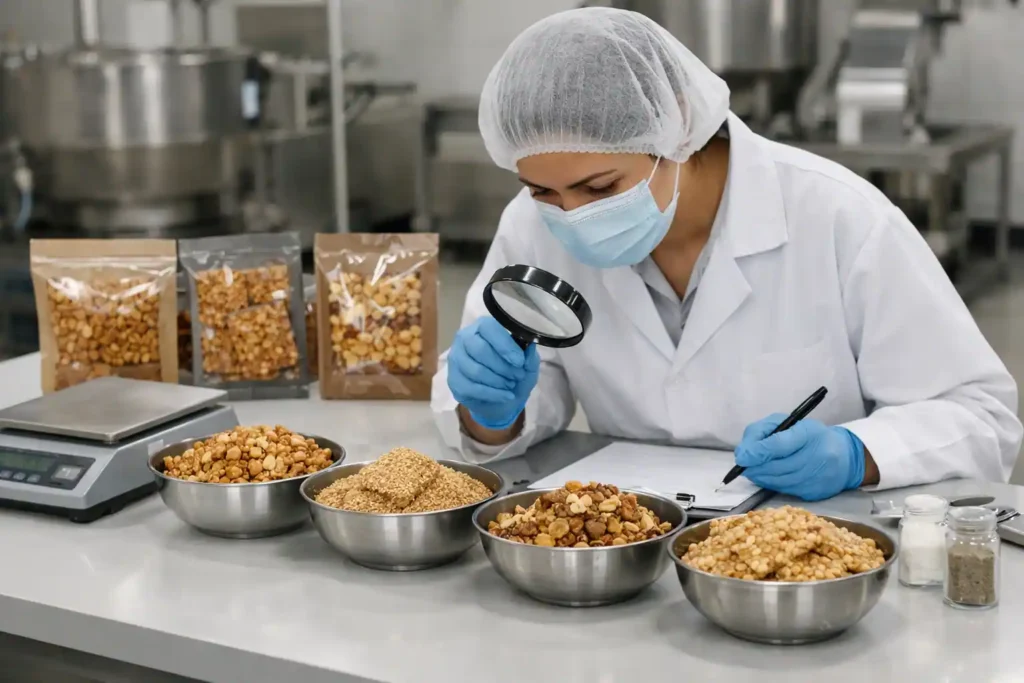
- Controlled, small-batch production
- Clean preparation environments
- Consistency across repeated orders
- Honest communication about shelf life and storage
These standards matter more than labels.
Wholesale vs Individual Orders: What Buyers Should Understand
Wholesale and individual orders differ in planning and execution:
- Quantity and batch scheduling
- Packaging formats
- Pricing logic
- Delivery timelines
A trusted chikki manufacturer plans production differently for bulk and individual buyers while maintaining the same quality standards.
For readers who want deeper insight into how production stages influence consistency, the pillar guide How the Chikki Manufacturing Process Works: A Step-by-Step Industry Guide explains these processes in detail.
Choosing the Right Production Source
Many buyers do not realize the difference between:
- Traders who source from multiple places
- Makers who control the entire process
Direct production control ensures better consistency, traceability, and accountability. A transparent chikki factory focuses on process, not shortcuts.
Common Mistakes Buyers Make When Choosing a Chikki Brand
- Choosing only by price
- Ignoring ingredient sourcing
- Assuming all chikki tastes the same
- Not asking process-related questions
These mistakes often lead to dissatisfaction, especially in repeat or bulk orders.
Questions Buyers Rarely Ask (But Should)
- Are peanuts roasted fresh or pre-stocked?
- Is jaggery reused between batches?
- Is cutting done by hand or machine?
- How is consistency maintained across batches?
Brands that answer these clearly usually operate with stronger internal standards.
Final Thoughts: Making an Informed Choice
Chikki appears simple, but quality lies in the details. A reliable chikki brand does not exaggerate claims—it educates buyers and respects tradition. When buyers understand ingredients, processes, and limitations, they naturally choose better.
FAQs
How do I know if a chikki brand uses real jaggery?
By aroma, taste depth, and natural matte finish rather than shine.
Is jaggery chikki good for daily consumption?
When made traditionally and consumed in moderation, it aligns well with traditional diets.
What is the ideal shelf life of traditional chikki?
Shorter than processed sweets, varying with climate and storage.
How should chikki be stored at home?
In a dry, airtight container away from moisture and heat.