Some everyday foods don’t demand attention. They quietly earn trust. Roasted peanuts belong to that rare group. Simple, affordable, and deeply traditional, they sit at the heart of global snack culture from Indian streets and African markets to kitchen shelves across the world.
Beyond taste, peanuts that are carefully roasted offer nutrition, shelf stability, and versatility. That is why they form the foundation of traditional foods such as peanut chikki, where quality always begins with the roast.
This guide explores everything that matters about this humble ingredient – its benefits, nutrition, varieties, cultural relevance, and why proper roasting still makes all the difference.
What Are Roasted Peanuts?
Peanuts are considered roasted when they are heated at controlled temperatures, usually without oil (dry roasting) or with minimal fat. During this process, natural sugars and proteins react, creating aroma, crunch, and depth of flavor.
This method:
- Brings out a nutty, warm aroma
- Improves texture and crispness
- Reduces moisture content
- Extends shelf life naturally
Dry-roasted peanuts are especially valued in traditional foods because they deliver clean flavor and firm texture without oil interference.
How Peanuts Were Traditionally Roasted
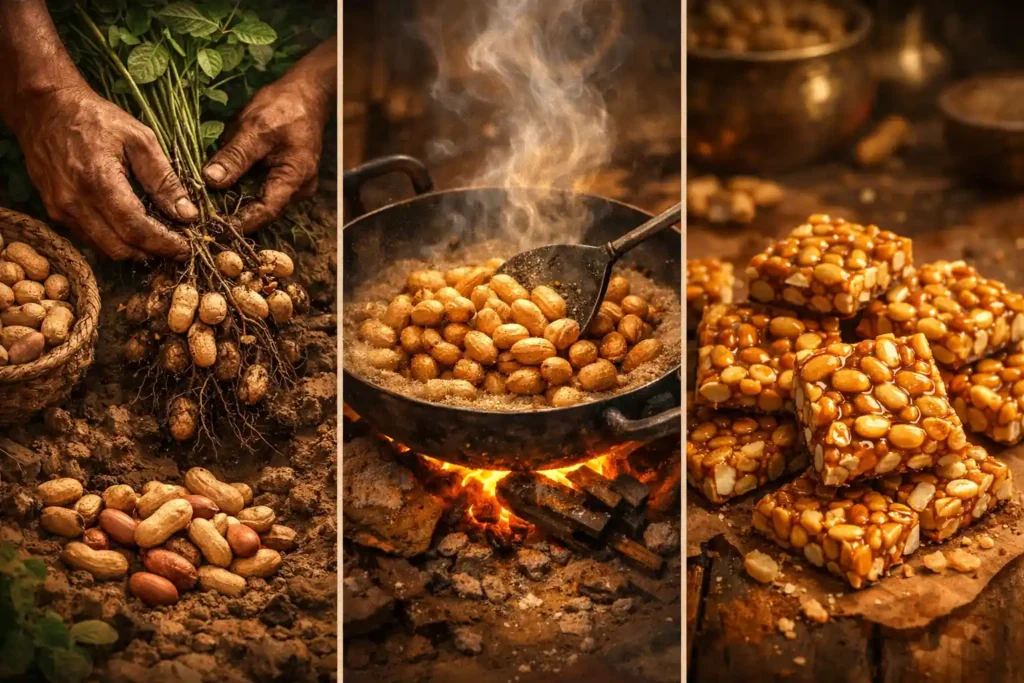
Long before machines and temperature gauges existed, people relied on experience. Roasting peanuts was a way to improve digestibility and preserve harvests.
- India: Sand roasting in iron kadais for even heat and deep flavor
- Africa: Open-pan roasting linked closely to harvest seasons
- Southeast Asia: Clay pots and pan methods shaped by trade routes
- USA & China: Gradual shift to modern dry roasting for consistency and scale
Even today, traditional roasting techniques continue to influence taste quality, especially in sweets and handcrafted snacks.
Benefits of Eating Roasted Peanuts
1. A Reliable Plant-Based Protein
With about 26g of protein per 100g, dry-roasted peanuts support:
- Vegetarian diets
- Active lifestyles
- Everyday protein requirements
2. Healthy Fats That Support Energy and Heart Health
They contain mostly unsaturated fats, which:
- Help maintain cholesterol balance
- Support heart health
- Provide slow, sustained energy
3. Easier Digestion Compared to Raw Peanuts
The roasting process reduces moisture and certain anti-nutrients, making peanuts:
- Gentler on digestion
- Less likely to cause bloating
- Suitable for regular consumption
4. Naturally Longer Shelf Life
Lower water activity means:
- Reduced risk of spoilage
- No dependency on preservatives
- Ideal for storage and travel food
5. Helpful for Weight Management When Eaten Mindfully
Although energy-dense, peanuts help:
- Increase fullness
- Reduce frequent snacking
- Slow digestion due to protein–fat balance
Nutritional Value (Per 100g – Approx.)
- Calories: ~567 kcal
- Protein: ~26 g
- Fat: ~49 g (mostly healthy fats)
- Fiber: ~6 g
- Minerals: calcium, iron, magnesium, potassium
- Antioxidants: activity increases during roasting
While certain heat-sensitive nutrients reduce slightly, antioxidant availability improves, keeping the overall profile well balanced.
👉 For a detailed breakdown, readers can explore:
Nutrients in Peanuts: Calories, Nutrition Facts & Health Value Explained
Raw Peanuts vs Dry-Roasted Peanuts
- Raw peanuts tend to have higher moisture, shorter shelf life, and are harder to digest.
- Dry-roasted peanuts offer better flavor, crunch, digestion, and storage stability.
This is why traditionally prepared snacks and sweets rely on roasted nuts rather than raw ones.
Peanut Varieties Best Suited for Roasting
Not every peanut behaves the same under heat.
- Bold / Runner varieties: larger size, higher protein, excellent crunch
- Spanish varieties: smaller, oil-rich, intense roasted flavor
- Indian regional varieties: preferred in traditional sweets for binding and texture
Selecting the right variety directly influences aroma, taste, and final quality.
Why Proper Roasting Matters in Peanut Chikki
Peanut chikki is unforgiving when it comes to roasting quality.
- Under-roasting leads to flat flavor
- Over-roasting introduces bitterness
- Excess oil ruins texture and shelf life
That’s why experienced producers focus heavily on this stage. A skilled chikki manufacturer understands that perfect chikki begins long before jaggery melts—it begins with correctly roasted peanuts.
👉 For a deeper understanding of its meaning, preparation, benefits, and cultural importance, read:
What Is Peanut Chikki? Meaning, Making, Benefits & Why It Still Matters Today
Global Popularity of This Simple Snack
Peanuts roasted without oil remain popular worldwide because they are:
- Affordable
- Filling
- Easy to store
- Adaptable across cultures
They appear as street food in India and Africa, household snacks in the West, and ingredients in sweets, sauces, and spreads across cuisines.
Traditional vs Industrial Roasting
Traditional roasting
- Greater flavor control
- Artisan-level taste
- Smaller batches
Industrial roasting
- Consistency and scale
- Faster processing
- Uniform output
The best results come from balancing traditional knowledge with modern control systems
Frequently Asked Questions (FAQ)
Final Thoughts
Roasted peanuts are not just a snack they are a foundation ingredient rooted in tradition, nutrition, and culture. From global kitchens to traditional Indian sweets, their value remains unchanged.
Understanding roasted peanuts, how they are prepared, why they are used, and what they offer—helps us appreciate foods like peanut chikki and the craftsmanship behind them. Quality always starts with knowledge, and with peanuts, it starts at the roast.
References & Sources
The nutritional values, health benefits, and food science insights mentioned in this article are supported by data and research from the following authoritative sources:
- USDA FoodData Central
– Source for calorie count, protein, fat, fiber, minerals, and micronutrient values of roasted peanuts. - National Institutes of Health (NIH)
– Research on peanuts, antioxidants, healthy fats, and cardiovascular health. - Harvard T.H. Chan School of Public Health
– Insights on nuts, weight management, heart health, and protein-rich plant foods. - Journal of Food Science
– Studies on roasting effects, Maillard reaction, antioxidant changes, and shelf life.