1️⃣ Introduction: What a Trusted Chikki Manufacturer Really Means
Manufacturing chikki is very different from simply selling it. While chikki is often viewed as a traditional sweet, the way it is produced plays a major role in determining its quality, safety, and consistency.
Home makers usually prepare chikki in small quantities for personal use. Small vendors may produce limited batches for local sale. An organised chikki manufacturer, however, follows a structured manufacturing process designed to handle raw materials responsibly, maintain hygiene, and deliver consistent quality at scale.
This guide focuses on the chikki manufacturing process – explaining how organised units operate, how quality is controlled, and why manufacturing credibility matters today.
2️⃣ Understanding the Role of a Chikki Manufacturing Unit
A chikki manufacturing unit does much more than combine peanuts and jaggery. Manufacturing involves planning, control, and accountability at every stage of production.
An organised manufacturer is responsible for:
- Handling raw materials in bulk
- Planning batch-wise production
- Monitoring quality and consistency
- Maintaining hygiene and food safety
- Supporting reliable wholesale supply
This is fundamentally different from retail sweet shops, which usually focus on small, short-term production. Factory-based manufacturing prioritises repeatability and traceability, making it suitable for retailers, distributors, and institutions that require dependable supply.
3️⃣ From Raw Ingredients to Finished Chikki: The Manufacturing Flow
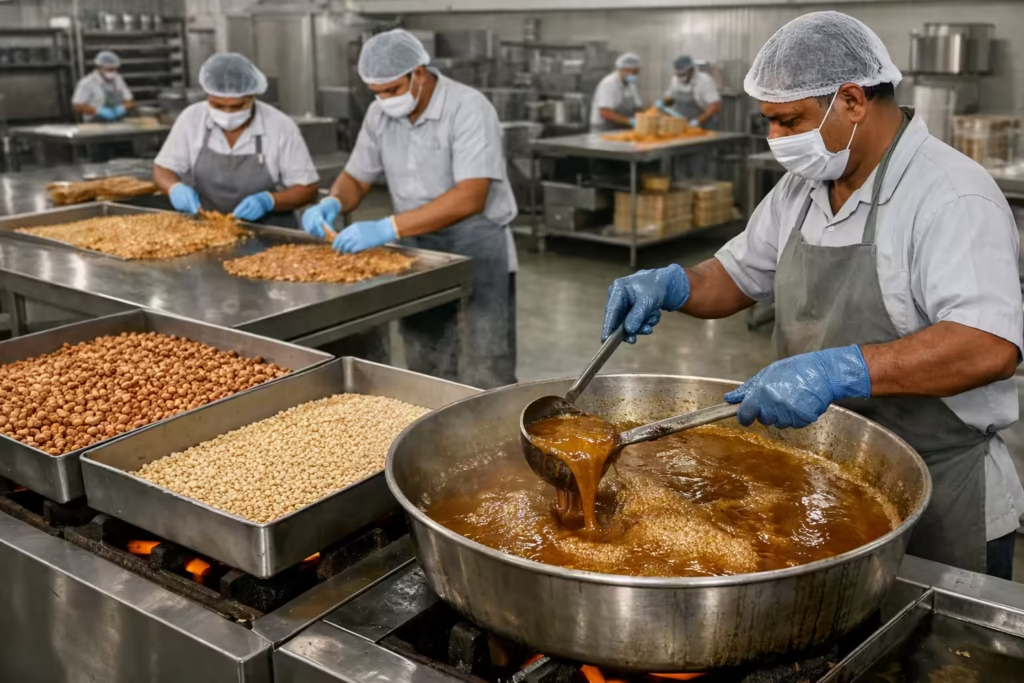
The chikki manufacturing process follows a clear and disciplined flow that balances traditional preparation with controlled execution.
At a high level, this includes:
- Sourcing peanuts, sesame seeds, dry fruits, and jaggery
- Cleaning and pre-processing raw materials
- Controlled roasting to develop aroma and texture
- Jaggery melting with precise temperature control
- Mixing ingredients in measured proportions
- Spreading, cooling, and cutting into uniform pieces
- Packaging using food-grade materials
While this flow describes the visible stages of manufacturing, organised units treat raw material sourcing as the true starting point of the process. Decisions around where ingredients are sourced from, how they are evaluated, and how they are stored directly influence roasting behaviour, binding consistency, and final product stability.
To explain this often-overlooked stage in detail, we’ve covered it separately in Raw Material Sourcing in Food Manufacturing: A Complete 360° Guide for Quality, Cost & Consistency, which looks at how disciplined sourcing supports reliable manufacturing outcomes.
4️⃣ Quality Control at Every Stage of Manufacturing
Quality control is the backbone of any reliable chikki manufacturing process. In organised units, quality is not checked only at the final stage – it is monitored continuously throughout production.
Key checks include:
- Incoming raw material inspection
- Consistent roasting levels
- Temperature and moisture control during jaggery handling
- Batch-wise inspection for taste and texture
- Weight and size consistency
These checks ensure that large-scale production does not dilute traditional taste or compromise safety. In most cases, quality issues arise not from ingredients, but from poor control during roasting, jaggery heating, or cooling stages.
If you want to understand how hygiene practices, regulatory standards, and compliance work together with quality control in real manufacturing environments, we’ve explained this in detail in Quality, Hygiene, and FSSAI Compliance in Chikki Manufacturing Units, where these controls are broken down step by step.
5️⃣ Hygiene & Food Safety Standards in a Modern Chikki Factory
Hygiene is especially important in jaggery-based products, which are sensitive to moisture and handling conditions.
Modern chikki factories maintain:
- Separate clean zones and processing zones
- Regular equipment sanitation schedules
- Controlled handling of hot mixtures
- Worker hygiene practices
- Sealed storage for finished products
These standards reduce contamination risk and help maintain shelf stability, reinforcing the seriousness of organised manufacturing.
6️⃣ FSSAI Compliance & Regulatory Responsibility
FSSAI compliance is not just a certification – it reflects manufacturing responsibility.
For chikki manufacturers, food safety rules, regulatory requirements, and compliance involve maintaining proper documentation, ensuring batch traceability, monitoring hygiene across the production floor, and taking accountability at every stage of manufacturing—from raw material handling to final dispatch.
Regulatory discipline builds trust with retailers and wholesale buyers. Many of these requirements work closely with hygiene and quality systems, which is why understanding them together is important. Our guide on Quality, Hygiene, and FSSAI Compliance in Chikki Manufacturing Units explains how these responsibilities are implemented in practice.
7️⃣ Manufacturing Different Chikki Types Under One Facility
An organised manufacturing setup can handle multiple chikki variants under one roof while maintaining unified standards.
Common variants include:
- Peanut chikki
- Sesame chikki
- Dry fruit chikki
- Crushed peanut chikki
Although ingredients differ, the core manufacturing discipline remains the same. Adjustments are made in roasting, mixing ratios, and cooling time, but hygiene, quality checks, and batch control remain consistent across all variants.
This approach allows a single manufacturer to support diverse requirements without duplicating infrastructure.
8️⃣ Scale, Consistency & Wholesale Manufacturing Capability
Wholesale manufacturing depends on consistency rather than speed. A structured chikki manufacturing process supports:
- Planned batch production
- Stable supply for retailers and distributors
- Uniform packaging formats
- Predictable shelf life
Handling bulk volumes without affecting quality requires disciplined production planning and controlled execution. Details about how this structure supports long-term supply requirements are outlined in our manufacturing and wholesale process, which explains how organised production aligns with wholesale needs.
9️⃣ Why Manufacturer Transparency Builds Trust
Today, both consumers and retailers want to know more about the food they buy. Common questions include:
- Where is it made?
- How is it handled?
- Who is responsible for quality?
Transparent manufacturing answers these questions naturally, without relying on marketing claims. When processes are clear and consistent, trust develops over time.
The values behind transparent manufacturing are often shaped at the beginning of a brand’s journey. We’ve shared that story in The Sweet Beginning: Why We Started Rudras Foods, which explains how our focus on process and responsibility shaped the way we manufacture today.
🔟 Our Manufacturing Philosophy: Tradition with Discipline
Traditional foods remain relevant when they are handled with care, not shortcuts. A disciplined manufacturing process respects tradition while applying structure, hygiene, and consistency.
This balance between traditional preparation and organised manufacturing ensures that taste and quality are preserved even at scale. We’ve explored this philosophy more broadly in Why Traditional Healthy Snacks Still Matter — From a Doctor & Manufacturer’s Perspective, which looks at why intent and process matter as much as ingredients.
1️⃣1️⃣ Manufacturer vs Trader vs Brand: Knowing the Difference
Not everyone selling chikki is involved in manufacturing.
- Manufacturer: Controls production, quality, and consistency
- Trader: Sources products from multiple producers
- Brand owner: Focuses mainly on packaging and marketing
From a buyer’s perspective, understanding this difference is essential when choosing a chikki brand – especially for wholesale, retail resale, or long-term sourcing. Manufacturing control determines how reliably a brand can deliver consistent quality over time.
In today’s food industry, many brand owners operate without owning a factory and instead work with OEM partners who handle production on their behalf. If you’d like to understand in detail how OEM & private label manufacturing works in such cases, we’ve explained that complete structure in a separate guide that breaks down the process from idea to market.
To help buyers navigate these differences clearly, we’ve outlined practical evaluation points in How to Choose a Trusted Chikki Brand for Wholesale & Individual Orders, which explains how manufacturing involvement impacts brand reliability.
1️⃣2️⃣ Who This Manufacturing Setup Is Meant For
A structured chikki manufacturing process supports:
- Retailers
- Distributors
- Institutions
- Corporate gifting partners
- Long-term supply buyers
Each relies on consistency, hygiene, and dependable production rather than one-time availability.
1️⃣3️⃣ Closing: Choosing a Manufacturer, Not Just a Product
Good chikki does not begin at the shelf. It begins at the manufacturing floor — where disciplined processes, controlled handling, and respect for traditional preparation come together.
Understanding the chikki manufacturing process helps buyers look beyond packaging and choose manufacturing reliability over surface appeal. More details on how this approach supports long-term supply are available through our manufacturing and wholesale process