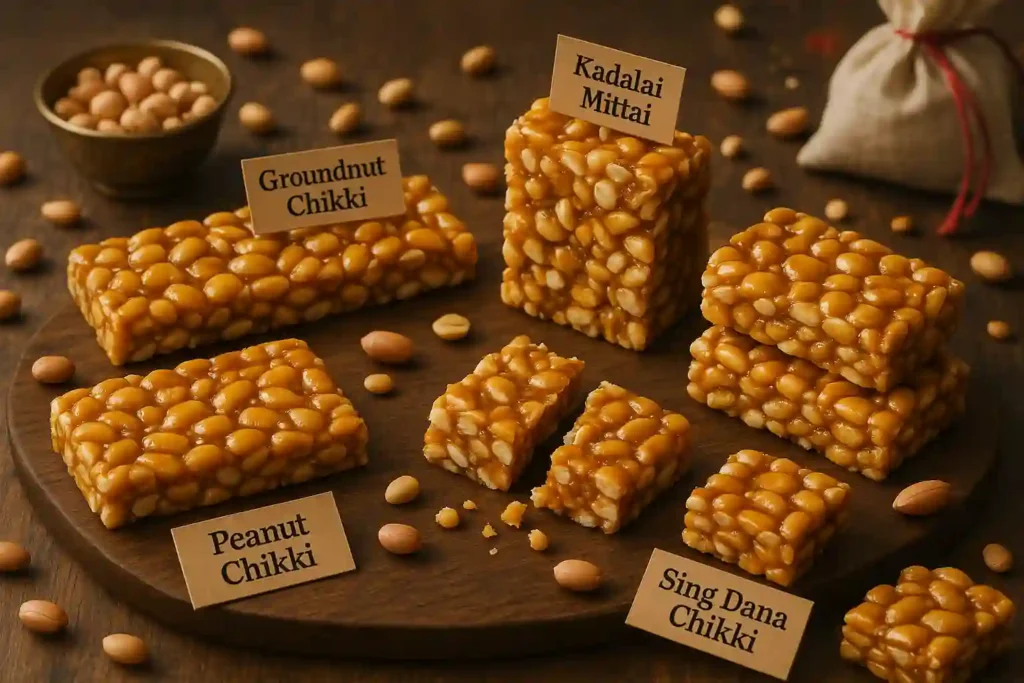
Ever sat down to munch a crunchy snack and realised that the person next to you calls it something totally different? That’s the magic of Indian snacks. One bar, many names-and every name carries its own little tale. Today we’re diving deep into the many names of peanut chikki, exploring how the same sweet found a dozen identities across India’s languages, regions and traditions.
After all: same crunch, different attitude.
1. Why one sweet goes by so many names
In India, language and culture change every few kilometres. Street-vendors rename items for their audience. Brands borrow names for marketing. Families pass down local words that stick.
So when you’ve got a simple slab of peanuts bound in jaggery, it’s almost inevitable it’ll pick up several aliases. And each alias tells a story of locale, dialect and nostalgia.
2. Peanut Chikki (The universal name)
Where you’ll hear it: All over India-urban shops, travel snacks, brand packs.
Why this name? The English word “peanut” paired with the Marathi word “chikki”.
Mini story: The sweet took off around the 19th century in the hills of Lonavala. Train-travel made it a go-to snack. Vendors began selling small slabs of jaggery + peanuts-easy to carry, hard to forget. Wikipedia
As English-speakers and brand marketers took over, the phrase “peanut chikki” became the catch-all.
How it evolved:
Over time, “peanut chikki” became the most widely understood name because it clearly describes both the ingredient and the form. But beyond the name, understanding peanut chikki also means knowing what it is made of, how it is traditionally prepared, why peanuts and jaggery are paired together, and how it fits into everyday eating across age groups.
For readers who want that complete foundation — from meaning and preparation to usage, nutrition, and quality — we’ve explained it clearly in our guide on what peanut chikki is, which brings together the basics in one place.
3. Groundnut Chikki (The farm-side name)
Where you’ll hear it: In villages and markets in Karnataka, Tamil Nadu, Andhra Pradesh.
Mini story: The crop was called “groundnut” during British agronomy days. People working fields and selling produce used the term. So when jaggery + roasted groundnuts became a snack, the old term stuck.
How it evolved: Urban shops later switched to “peanut chikki”, but rural areas often still say “groundnut chikki”.
4. Moongfali Chikki (North India’s comfort name)
Where you’ll hear it: In Uttar Pradesh, Delhi, Haryana, Madhya Pradesh.
Mini story: “Moongfali” is Hindi for peanut. As sweet-shops from the south moved northwards, the local term fused with “chikki”. The result: the snack every household buys during winter evenings and festivals.
How it evolved: It became part of the normal winter snack routine-warm chai plus crisp moongfali chikki.
5. Moongfali Gajak (Seasonal twist)
Where you’ll hear it: North India—especially Rajasthan, Haryana, UP.
Mini story: “Gajak” traditionally refers to sesame-based sweets. But during autumn and winter fairs (Sankranti, Lohri) peanuts joined in, and so people began calling peanut chikki “gajak”. The lines blurred. Wikipedia+1
How it evolved: Now you’ll hear “gajak” used for both sesame and peanut slabs, depending on region and festival.
6. Sing Chikki / Sing Dana Chikki (Gujarati & Rajasthani accent)
Where you’ll hear it: Gujarat, parts of Rajasthan.
Mini story: “Sing” or “Sing Dana” means peanut in Gujarati. Vendors of sweets and snacks used this to differentiate from sesame versions. The name sounded local, familiar, catchy.
How it evolved: Packaged snacks in these states kept the term-it proved brand-friendly while retaining regional flavour.
7. Kadalai Mittai (South India’s soulful name)
Where you’ll hear it: Tamil Nadu, parts of Karnataka.
Mini story: In Tamil, kadalai = peanut, mittai = sweet. The phrase existed long before mainstream branding entered the region.
How it evolved: Even today, many villagers refer to it only as kadalai mittai. The modern packaging may say “peanut chikki”, but the word holds emotional weight.
8. Kadala Chikki / Kadala Mittai (Kerala’s variation)
Where you’ll hear it: Kerala.
Mini story: Influenced by Tamil but with a local touch. Small shops and farmers popularised this term well before big snack brands arrived.
How it evolved: Tourist-oriented packs may use “peanut chikki”, but locals often stick to “kadala chikki”.
9. Peanut Burfi / Groundnut Burfi (Sweet-shop branding)
Where you’ll hear it: Across many sweet-shops in India.
Mini story: To appeal to traditional mithai buyers, shops shaped the slabs like burfi (square pieces) and called them “burfi” instead of “chikki”. This elevates the humble snack into the sweets-counter territory.
How it evolved: People often buy “peanut burfi” thinking of chikki in sweets form—so the phrase lives on.
10. Peanut Candy / Peanut Crunch (Modern rebrand)
Where you’ll hear it: Supermarkets, e-commerce, snack-brands targeting kids or younger buyers.
Mini story: Brands wanted a western-friendly name. “Candy” and “crunch” sounded fun, modern. They tied in with health-snack trends (protein, jaggery, minimal processing).
How it evolved: These names now pop up in online listings and freezer-snack aisles.
11. Peanut Brittle (International & NRI variant)
Where you’ll hear it: Abroad, among NRIs, global snack markets.
Mini story: Overseas buyers compared the Indian snack to the western “brittle”. So chikki got tagged as “peanut brittle”-an easily understandable term for global consumers. Saveur+1
How it evolved: Still mostly used outside India, or for export-pack labeling.
12. Peanut Energy Bar (Fitness-trend name)
Where you’ll hear it: Gyms, health stores, online nutrition-snack brands.
Mini story: Entrepreneurs repackaged chikki into bar form (sometimes longer, thinner), marketed as “natural energy bar”. Same ingredients. Different positioning.
How it evolved: A marketing twist rather than a traditional name-but it’s genuine enough to count in the story of different names of peanut chikki.
13. The quirky misspellings that gained traction
Here are some fun off-shoots:
- Peanut Chiki
- Groundnut Chiki
- Chikki Peanuts
- Peanut Cheki
Mini story: Online search behaviour made odd spellings popular. Brands noticed and sometimes included these variations on packaging just to capture traffic. Misspellings became mini-brands in their own right.
14. The (sweet) wrap-up
Why is this snack renamed so many times? Because:
- Different languages and dialects
- Festival influence and regional cooking traditions
- Street-vendor creativity and local slang
- Brand marketing and packaging strategy
- Family traditions and home-kitchen names
So yes—call it chikki, mittai, gajak, burfi, or candy-but your teeth still know it’s the same crunchy joy.
15. What’s happening in the news around this snack?
Here are two slices from recent reports:
- A viral video exposed appalling hygiene in a factory making peanut chikki, raising concerns among consumers about quality and safety. India Today
- A lifestyle article listed “peanut chikki” among the top snacks for Diwali parties, showing how the sweet remains deeply embedded in India’s festive culture. The Times of India
These reveal two truths: one, traditions evolve but still need vigilance; two, names may shift but emotional value doesn’t fade.
14. Wrap-Up: One Sweet, Many Names, Same Crunch
Across India, this humble snack wears many hats. Some call it peanut chikki, others call it groundnut chikki, peanut burfi, kadalai mittai, moongfali gajak, or even sing dana chikki. Names may change from village to village, festival to festival, or shop to shop – but the essence remains the same: crunchy, sweet, roasted peanuts bound in jaggery.
That’s the magic of this treat. And that’s why, no matter what you type into a search bar – peanut chikki, groundnut chikki, or peanut burfi — the result is the same: Rudrasfoods.
Rudras, a trusted and traditional peanut chikki manufacturer, delivers the authentic taste you remember from childhood. Every slab is made the old-fashioned way — rich jaggery, perfectly roasted peanuts, and care that never compromises tradition. Whether you enjoy it as peanut chikki, call it groundnut chikki, or pick a piece of peanut burfi, you get the same nostalgic crunch and quality that has made Rudras a household favourite.
👉 Experience the authentic flavour of Rudras Peanut Chikki today – your traditional peanut chikki manufacturer that stays true to taste, texture, and tradition, no matter the name.