
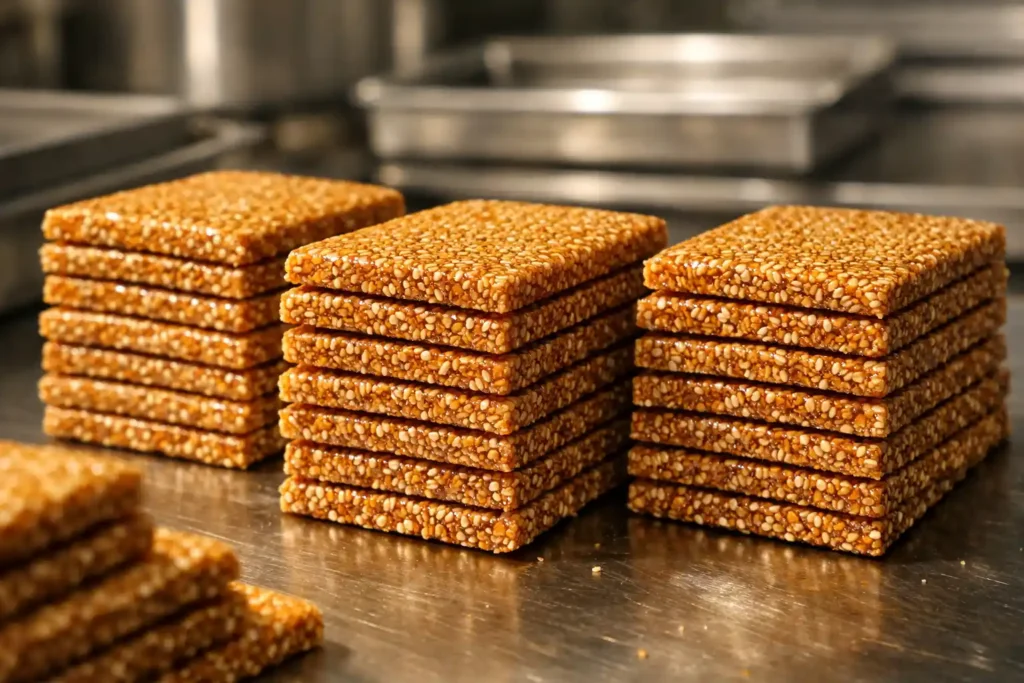
In sesame chikki manufacturing, taste is never accidental.
Aroma, crunch, and purity are shaped long before the chikki is cut – right from sesame seed selection to jaggery handling and hygiene practices inside the factory.
As a manufacturer, we’ve learned that small process decisions often make the biggest difference in how a batch finally tastes. Below are the key manufacturing factors that consistently improve sesame chikki quality, combining industry knowledge with our on-ground experience.
1. Sesame Seed Quality Is the Foundation of Aroma
High-quality, mature white sesame seeds (Sesamum indicum) are essential. Seeds that are damaged, rancid, oil-leaked, or mixed with foreign matter can quickly ruin aroma, even if the rest of the process is perfect.
Industry practice
- Manual or mechanical cleaning using sieves and blowers
- Removal of dust, stones, broken seeds, and immature grains for even roasting
Our experience
We follow a two-stage inspection process, first during procurement and again before roasting. This extra step may slow production slightly, but it prevents uneven roasting, burnt notes, and bitterness that often appear later.
Result:
✔ cleaner nutty aroma
✔ uniform roasting
✔ consistent crunch across batches
2. Moisture Control Directly Affects Crunch
Moisture is one of the most underestimated factors in sesame chikki manufacturing.
Industry insight
- Ideal sesame moisture is kept below 7–10%
- Excess moisture suppresses aroma compounds like pyrazines
- Improper moisture leads to soggy texture and dull color
Our experience
We’ve noticed that even visually “good” seeds behave poorly during roasting if moisture isn’t controlled. Drying seeds to optimal levels before roasting significantly improves:
- crispness
- aroma release
- roasting uniformity
- shelf stability
We also allow short resting time after drying, which stabilizes internal moisture and prevents surface scorching during roasting.
3. Controlled Roasting Creates the Signature Sesame Aroma
Roasting is where sesame chikki truly gets its identity.
Industry standards
- Dry roasting at 160–210°C
- Carefully timed roasting develops Maillard reactions
- Over-roasting leads to bitterness; under-roasting weakens aroma
Our experience
Instead of rushing roasting for speed, we adjust time based on:
- seed size
- moisture variation
- batch quantity
We use staged roasting control, which strengthens nutty aroma while preserving natural sesame oil character. This results in a crunch that stays intact even after cooling and packing.
4. Jaggery Quality Defines Taste & Purity
Jaggery isn’t just a sweetener, it’s a structural and flavor component.
Industry guidelines
Jaggery should meet FSSAI standards:
- ≥90% total sugars
- ≤10% moisture
- ≤2% insoluble matter
Impure jaggery causes dark color, burnt notes, uneven binding, and shorter shelf life.
Our experience
We test jaggery batches not only for sweetness, but also for:
- melting behavior
- aroma during heating
- color clarity
- syrup stability
Pure jaggery produces a clean, balanced sweetness that allows sesame flavor to dominate naturally.
5. Temperature Control During Syrup Preparation
Even good jaggery can fail if temperature is mishandled.
Industry practice
- Heating syrup to hard-ball / drop-test consistency
- Continuous stirring to prevent scorching
- Precise temperature avoids stickiness or bitterness
Our experience
We rely on visual cues and texture behavior, not just thermometers. This prevents overcooking, maintains natural color, and ensures firm binding that improves shelf life without making the chikki overly hard.
6. Handling & Mixing Influence Final Texture
Industry methods
- Filtering melted jaggery removes debris
- Pulling or stretching syrup improves sesame adhesion
- Controlled mixing prevents crystallization
Our experience
Careful hand-guided mixing ensures each sesame seed is evenly coated—no dry pockets, no excessive syrup buildup. This balance is crucial for maintaining crunch while keeping bite comfortable.
7. Hygiene & Consistency Are Non-Negotiable
Taste can be ruined even after perfect processing if hygiene slips.
Industry standards
- GMP and GHP practices
- Stainless steel equipment (SS 304/316)
- Separate raw and cooked zones
- Batch traceability and internal quality checks
Our experience
Maintaining clean workspaces and consistent storage conditions (20–25°C with airtight packaging) protects aroma, prevents rancidity, and ensures the same taste experience across batches.
Traditional Knowledge + Modern Controls
While many chikki manufacturers in India rely on traditional wisdom, combining it with moisture control, roasting discipline, hygiene systems, and consistency checks creates superior results. Whether in a small unit or a growing sesame chikki factory, discipline in these fundamentals separates average chikki from premium chikki.
A Note for Home Chikki Lovers
If you’re interested in how to make sesame chikki at home, understanding these manufacturing principles helps explain why temperature, roasting control, and ingredient handling matter so much—even on a smaller scale.
Final Thought
Good sesame chikki isn’t about shortcuts.
It’s about respecting raw materials, controlling processes, and repeating the same care—batch after batch.
That’s what consistently delivers better aroma, crunch, and purity.