Across India, many traditional snacks have remained part of everyday life for generations. One of the most familiar among them is the crunchy sweet made from roasted peanuts and jaggery. But many people still pause to ask a simple question: what is peanut chikki, and why has it remained popular for decades?
At first glance, this traditional sweet looks simple. Yet behind its simplicity lies a long history of practical nutrition, regional food traditions, and careful preparation techniques.
Unlike many modern packaged snacks that rely on long ingredient lists, this groundnut-based sweet is built on simplicity. Just roasted peanuts and jaggery come together to create a snack that is filling, travel-friendly, and naturally flavourful.
Because of these qualities, this classic snack has continued to remain relevant even in modern times. This guide explores everything from its ingredients and preparation methods to its history, regional varieties, and role in today’s food culture.
What Is Peanut Chikki?
To begin with the basic definition, what is peanut chikki?
It is a traditional Indian sweet snack prepared using roasted groundnuts and melted jaggery. Once the mixture is blended together, it is spread into a thin layer, cooled, and cut into small crunchy pieces.
Although the ingredients are simple, the final texture depends greatly on preparation. The roasting stage, the temperature of the jaggery syrup, and the cooling process all influence the final crunch and flavour.
Across India, this snack is recognised by several regional names. In Tamil Nadu it is widely known as kadalai mittai, while other regions refer to it as groundnut chikki or peanut brittle.
These different names reflect how the same traditional sweet became part of many regional food cultures. Exploring the different names used for this snack across India reveals how widely it has spread across communities.
Ingredients Used in This Traditional Groundnut Sweet
The identity of this crunchy snack comes from its minimal ingredients. Traditionally, only two main components are required.
Roasted Groundnuts
Peanuts are the foundation of the sweet. Proper roasting removes moisture and enhances the nutty flavour while creating the characteristic crunch.
Jaggery
Jaggery acts as both the sweetener and binding ingredient. When heated to the correct stage, it forms a syrup that holds the roasted nuts together as the mixture cools.
Compared with refined sugar, jaggery also contains natural minerals and gives the sweet its traditional taste.
Because peanuts make up most of the snack, their nutritional profile plays an important role. The nutrients present in peanuts and their health value help explain why groundnut-based sweets have long been used as energy foods.
The Historical Roots of This Snack
Understanding what is peanut chikki becomes easier when looking at its historical role.
Originally, this sweet was not intended as a dessert. Instead, it developed as a compact energy snack that farmers, labourers, and travellers could carry easily.
Peanuts supplied fats and protein, while jaggery provided carbohydrates and minerals. Together they created a food that could deliver quick energy during long working hours.
Over time, the snack moved from home kitchens and local street vendors into organised production. The evolution of groundnut chikki in India explains how preparation methods gradually improved while the ingredients remained unchanged.
Regional Identity: Kovilpatti Kadalai Mittai
Some regions became particularly well known for producing this sweet. One of the most famous examples is Kovilpatti in Tamil Nadu, where kadalai mittai developed a strong reputation.
Local preparation techniques focused on proper roasting, the correct jaggery stage, and consistent cutting methods. These practices helped create a distinctive texture that gained recognition beyond the region.
The story of Kovilpatti kadalai mittai shows how a small town helped shape the identity of a traditional groundnut sweet.
For those interested in the deeper cultural background, the history of kadalai mittai in Tamil Nadu traces how preparation methods evolved through generations.
Lonavala Chikki and the Travel Tradition
Another region closely connected with this snack is Lonavala in Maharashtra.
Because of its railway routes and tourist traffic, travellers often purchased chikki while passing through the hill station. Over time, the sweet became strongly associated with travel culture.
The history of Lonavala chikki explains how railway travellers helped popularise this crunchy sweet across the country.
There is also an interesting comparison between the two famous traditions — Lonavala chikki and Kovilpatti kadalai mittai — showing how regional styles developed their own identities.
Tourism later helped expand the industry further, leading to the growth of the Lonavala chikki market.
How Groundnut Chikki Is Made
Although the recipe uses only a few ingredients, preparation requires careful timing.
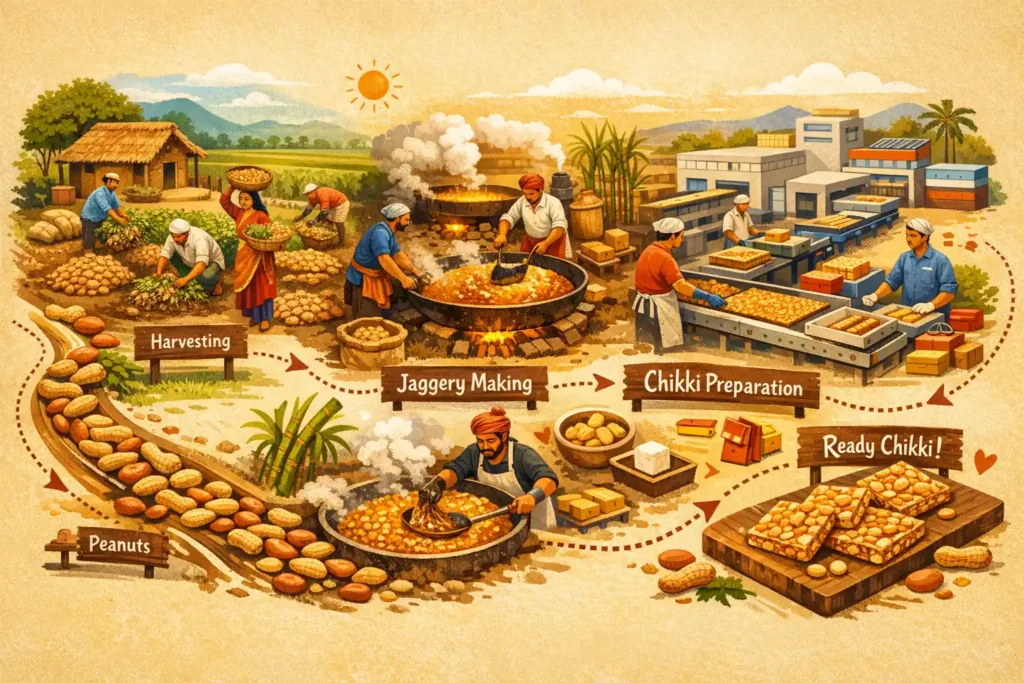
The typical process includes:
- Roasting groundnuts to remove moisture
- Heating jaggery until it reaches the correct syrup stage
- Mixing the roasted nuts into the jaggery syrup
- Spreading the mixture and cutting it into pieces before it hardens
Small variations in temperature can change the final texture. A detailed explanation of how chikki stays crunchy for days shows how each stage affects the final result.
Traditional Preparation vs Modern Manufacturing
Earlier, this sweet was prepared mainly in homes or by small vendors. Today, larger production systems help maintain consistent quality and hygiene.
A traditional peanut chikki manufacturer focuses on maintaining authentic flavour while ensuring controlled preparation conditions.
Modern production units carefully monitor roasting temperatures, jaggery stages, and packaging methods. The full manufacturing process inside a chikki production facility demonstrates how traditional methods can be maintained even at larger scale.
Nutritional Value of Groundnut Chikki
One of the main reasons this snack remains popular is its nutritional balance.
Peanuts contribute:
• protein
• healthy fats
• long-lasting energy
Jaggery contributes:
• carbohydrates
• minerals
• natural sweetness
Together, these ingredients create a snack that provides steady energy. Many people explore the benefits of groundnut chikki when looking for traditional snacks with simple ingredients.
A Traditional Snack in Modern Diets
In recent years, traditional foods have begun receiving renewed attention. As consumers become more aware of ingredients and processing levels, many look for snacks that are simple and familiar.
Because it uses minimal ingredients and traditional preparation, peanut chikki as a healthy snack option has started gaining renewed interest among modern consumers.
Traditional Sweet vs Modern Energy Bars
Today’s market includes many packaged energy snacks, particularly protein bars. These products often rely on supplements and added ingredients.
In contrast, the groundnut-jaggery combination provides naturally occurring nutrients. A comparison between peanut chikki and protein bars helps explain how traditional snacks differ from modern energy foods.
Suitable for Different Age Groups
This crunchy sweet is enjoyed by people of all ages.
Children often enjoy its flavour and texture, while adults appreciate it as a quick energy snack between meals.
However, certain life stages require extra awareness. Questions sometimes arise regarding peanut chikki during pregnancy, particularly related to portion size and ingredient quality.
Types of Groundnut Chikki
Although the ingredients remain the same, the sweet appears in several variations depending on preparation style.
Common forms include:
• whole groundnut chikki with intact peanuts
• crushed groundnut versions with denser texture
• thicker or thinner cuts depending on the maker
These differences mainly reflect regional preparation methods rather than changes in ingredients.
How to Identify Good Quality Chikki
High-quality chikki usually shows several clear characteristics:
• evenly roasted peanuts
• balanced sweetness
• clean break when snapped
• pleasant roasted aroma
Incorrect jaggery stages or poor roasting can affect both texture and taste.
Storage and Shelf Life
Because the snack contains very little moisture, it has a relatively long shelf life.
However, humidity can affect its texture. Proper storage helps maintain the crunchy consistency.
Recommended storage practices include:
• keeping pieces in airtight containers
• storing in a cool and dry place
• avoiding exposure to moisture
Market Growth and Industry Importance
Beyond being a snack, kadalai mittai and groundnut chikki also represent an important small-scale food industry.
Production networks across Tamil Nadu and Maharashtra support local employment and traditional food businesses. The development of the kadalai mittai market in Tamil Nadu demonstrates how this traditional sweet continues to contribute to regional economies.
Why This Traditional Snack Still Matters Today
Even with the rise of modern packaged foods, this simple groundnut-jaggery sweet continues to remain relevant.
Its lasting popularity comes from three key factors:
• simple ingredients
• reliable energy value
• traditional preparation methods
Understanding what is peanut chikki reveals why this humble snack has survived generations of changing food habits.
Today, many people still enjoy classic varieties such as peanut chikki and kadalai mittai, which continue to reflect the traditional preparation methods that made this sweet famous in the first place.