Introduction: Why This Topic Can Feel Confusing at First
At first glance, combining a doctor’s view with a manufacturer’s perspective might feel unusual. People often assume health advice comes only from clinics, while food manufacturing is seen as a business activity. But when it comes to everyday snacks, these two worlds quietly overlap more than we realize.
What makes a snack healthy is not just what nutrition books say it also depends on how honestly the food is prepared. The real value of traditional snacks comes from both understanding the body’s needs and respecting the process that turns simple ingredients into food we consume daily.
How the Meaning of “Healthy Snacks” Has Changed Over Time
Today, the term healthy snacks is often driven by packaging claims, labels, and trending ingredients. Protein bars, baked chips, and fortified snacks dominate shelves, even though many of them are highly processed and designed mainly for long shelf life.
Earlier food habits were simpler. Snacks were made using familiar ingredients like peanuts, sesame, jaggery, and grains. Their strength came from balance – not excess and from preparation methods that didn’t try to override nature with additives or preservatives.
Why Doctors Often Emphasize Simplicity in Everyday Food
Across nutrition discussions, doctors commonly stress a few basic principles: fewer ingredients, minimal processing, and natural sources of energy. Snacks that rely on whole ingredients tend to support digestion, steady energy release, and satiety better than heavily engineered foods.
Traditional snacks naturally follow these principles. When peanuts or sesame are combined with jaggery, they offer a balance of healthy fats, plant-based protein, and natural carbohydrates without the need for artificial enhancers.
Peanut Chikki: A Simple Snack with Natural Balance
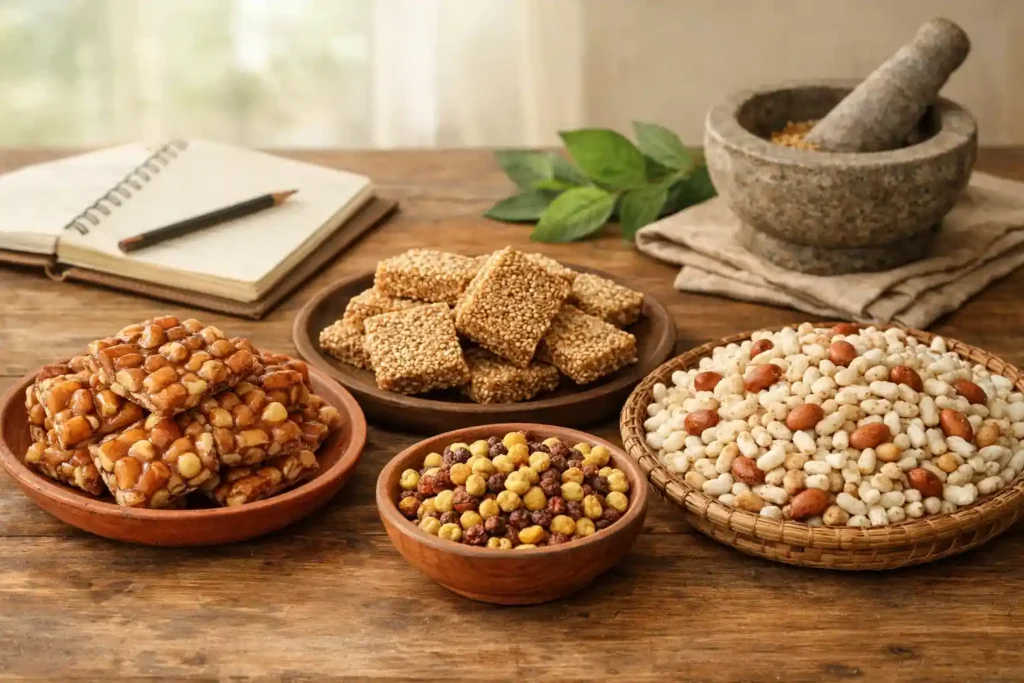
Peanut chikki stands out because of its straightforward composition. Peanuts provide protein and healthy fats, while jaggery contributes minerals like iron and acts as a natural sweetener. This combination supports sustained energy rather than sudden sugar spikes.
When prepared fresh and in controlled batches, peanut chikki aligns closely with what many nutrition professionals recommend for a mid-day or post-work snack: something filling, familiar, and free from unnecessary ingredients.
Sesame Chikki and the Strength of Traditional Ingredients
Sesame seeds have long been valued in traditional diets for their calcium, healthy fats, and micronutrients. When combined with jaggery, sesame chikki becomes more than a sweet – it becomes a nutrient-dense snack rooted in seasonal wisdom.
Such snacks are often recommended in moderation for people looking to support bone health and energy needs naturally, without relying on synthetic supplements or ultra-processed foods.
Other Traditional Snacks Doctors Often Speak Positively About
Beyond chikki, doctors frequently mention healthy snacks like roasted Bengal gram, puffed rice with groundnuts, and boiled legumes as examples of sensible eating. These foods are light, familiar, and easy for the body to recognize and digest.
The common thread among all of them is not branding or claims, but preparation. When made fresh and handled properly, they quietly support daily nutrition – an approach also reflected in general dietary guidance shared by institutions such as the National Institute of Nutrition (India) and the World Health Organization.
Why Processing Matters More Than Most People Realize
Two snacks can look similar on the surface yet behave very differently in the body. Excessive processing often strips ingredients of their natural structure, requiring additives to restore taste or texture. This is where many modern snacks lose their health value.
Traditional snacks, when made using controlled preparation methods, retain the original character of ingredients. This is why their impact on the body tends to be gentler and more predictable. For readers who want to understand how the chikki manufacturing process works in organised units, including how processing discipline protects ingredient integrity, we’ve explained this in detail in our comprehensive manufacturing guide.
Choosing Healthy Snacks Goes Beyond Knowing Nutrition
Even with the best health knowledge, the outcome depends on where the food comes from. A snack may sound healthy on paper, but if it is produced without care, freshness, or ingredient integrity, its value reduces significantly.
Understanding food from a health perspective is important-but choosing the right source matters just as much. When traditional snacks are prepared by manufacturers who respect both ingredients and process, that is when their true health benefits reach you fully.
Final Thought
Knowing what doctors recommend helps you understand what to eat. Knowing how food is made helps you decide whom to trust. When simple nutrition principles come together with responsible manufacturing, traditional snacks regain the place they quietly deserve in everyday life.
That’s why choosing a traditional chikki manufacturer matters. If you want peanut and sesame chikkis prepared with care, ingredient integrity, and a focus on quality over shortcuts, explore how RudrasFoods approaches chikki manufacturing -where health begins long before the first bite.