The First Bite Tells You Everything
There is a clear difference between chikki that is simply sweet and chikki that feels complete. When you bite into a traditionally made kadalai mittai, you don’t just taste sweetness-you experience layers of flavor working together.
You may notice:
- A deep caramel warmth
- A roasted nutty richness
- A mild smoky finish
This difference is often mistaken for nostalgia. But in reality, it is the result of how heat, ingredients, and time interact during preparation. The method changes everything—from flavor to nutrition to texture.
Heat Is Not Just Heat – The Core Difference Begins Here
Modern cooking systems are built for consistency. Gas and induction provide stable, uniform heat, which works well for mass production. But flavor development does not always benefit from uniformity.
Wood-fire cooking creates a more dynamic environment. Heat is not fixed—it moves, fluctuates, and creates multiple temperature zones within the same pan.
This results in:
- Uneven but beneficial caramelization
- Natural temperature cycles (heat peaks and drops)
- Multi-layered cooking instead of single-layer heating
Because of this, jaggery does not cook in a single uniform way. Different parts of the mixture develop slightly different characteristics, which ultimately combine into a richer final product.
Modern systems remove this variation. The result is consistency-but also reduced depth.
The Chemistry Behind Flavor – Where Tradition Has the Edge
The transformation of chikki is driven by two major reactions: Maillard reaction and caramelization. These reactions are highly sensitive to how heat is applied.
The Maillard reaction creates roasted and nutty flavors. It works best when temperature is not constant, because:
- Reaction speeds change with heat fluctuations
- Different compounds form at different temperatures
- Layered flavor development becomes possible
Caramelization defines sweetness and structure. It requires gradual heating, which wood fire naturally supports.
What wood fire additionally introduces:
- Natural smoke compounds like guaiacol and syringol
- Phenolic molecules that enhance aroma
- A subtle smoky depth that machines cannot replicate
In modern systems, these elements are completely absent. The chemistry becomes simplified, and so does the flavor.
Nutritional Impact – More Than Just a Sweet
Traditional chikki is often underestimated as just a sugary snack. However, the preparation method plays a major role in its nutritional value.
Benefits observed in traditional roasting:
- Increased antioxidant activity from Maillard compounds
- Formation of melanoidins that protect nutrients
- Improved protein digestibility through controlled heating
The biggest difference comes from the sweetener:
| Factor | Jaggery | Refined Sugar |
|---|---|---|
| Minerals | Iron, calcium, potassium | None |
| Processing | Natural | Highly refined |
| Nutrition | Retained | Lost |
| Flavor | Rich, complex | Plain |
Because traditional chikki uses jaggery and controlled roasting, it offers both functional nutrition and better flavor integration.
Flavor Depth – Why Traditional Chikki Feels Complete
Flavor is built from multiple aromatic compounds working together. Traditional chikki develops a much wider range of these compounds compared to modern production.
Key contributors to flavor:
- Pyrazines → nutty roasted aroma
- Caramel compounds → sweetness and depth
- Smoke phenolics → mild smoky complexity
This combination creates a layered experience. Each bite may feel slightly different, which enhances satisfaction.
Modern chikki, produced under uniform conditions, forms fewer compounds. As a result, it often feels:
- Overly sweet
- Less aromatic
- One-dimensional
Traditional chikki, on the other hand, delivers a multi-sensory experience rather than just sweetness.
From Tamil Nadu to Kovilpatti – The Cultural Journey of Kadalai Mittai
Kadalai mittai has deep roots in Tamil Nadu’s traditional food culture, where it began as a simple, energy-rich snack made using locally available ingredients like groundnuts and jaggery. It was commonly prepared during festivals, temple gatherings, and village celebrations, where food was not just consumed but shared as part of community life.
Over time, certain regions began to develop their own identity around this traditional sweet. Among them, Kovilpatti emerged as one of the most recognized centers for kadalai mittai, known for its distinct taste and preparation style.
This recognition was not accidental. It was shaped by a combination of factors:
- Locally grown, high-quality groundnuts
- Traditional wood-fire cooking methods
- Skilled preparation techniques passed through generations
In Kovilpatti, kadalai mittai was never treated as just a product. It evolved as a craft-where the environment, the raw materials, and the maker’s experience all played an important role in defining its final taste and texture.
However, as production scaled over time, many of these traditional methods were gradually replaced. Wood fire gave way to gas-based systems, and manual preparation shifted toward machine-driven processes.
Today, only a limited number of makers continue to follow the original wood-stove method. Among them, RudrasFoods represents this traditional approach, preserving the same preparation style that originally defined the identity of authentic kadalai mittai.
Texture Science – The Secret Behind the Perfect “Snap”
The signature “snap” of chikki is a direct result of how jaggery transforms under heat.
For the ideal texture:
- Jaggery must reach the hard-crack stage (149–154°C)
- Sugars must properly invert
- Cooling must happen at the right time
Traditional methods allow this to happen gradually, guided by experience and observation.
This results in:
- Clean, crisp breaking texture
- Strong binding between nuts and syrup
- Balanced hardness without brittleness
In contrast, rapid industrial heating often leads to:
- Grainy structure
- Uneven hardness
- Weak nut binding
Texture may look similar visually, but the eating experience differs significantly.
What Modern Production Changes – And What It Leaves Behind
Modern production focuses on efficiency and scalability. While this improves output, it introduces several changes.
Common industrial adjustments:
- Use of refined sugar for consistency
- Artificial flavoring for uniform taste
- High-speed processing
- Large batch production
What gets reduced:
- Flavor complexity
- Nutritional value
- Traditional authenticity
The product becomes easier to produce, but further away from its original form.
Why Consumers Are Moving Back to Traditional Foods
Consumer preferences are shifting toward authenticity and transparency.
Current trends show:
- Increasing demand for clean-label products
- Preference for natural ingredients
- Growing awareness of traditional methods
People are not just choosing snacks-they are choosing how those snacks are made.
Traditional processes like wood-fire cooking naturally align with these expectations, which is why they are gaining relevance again.
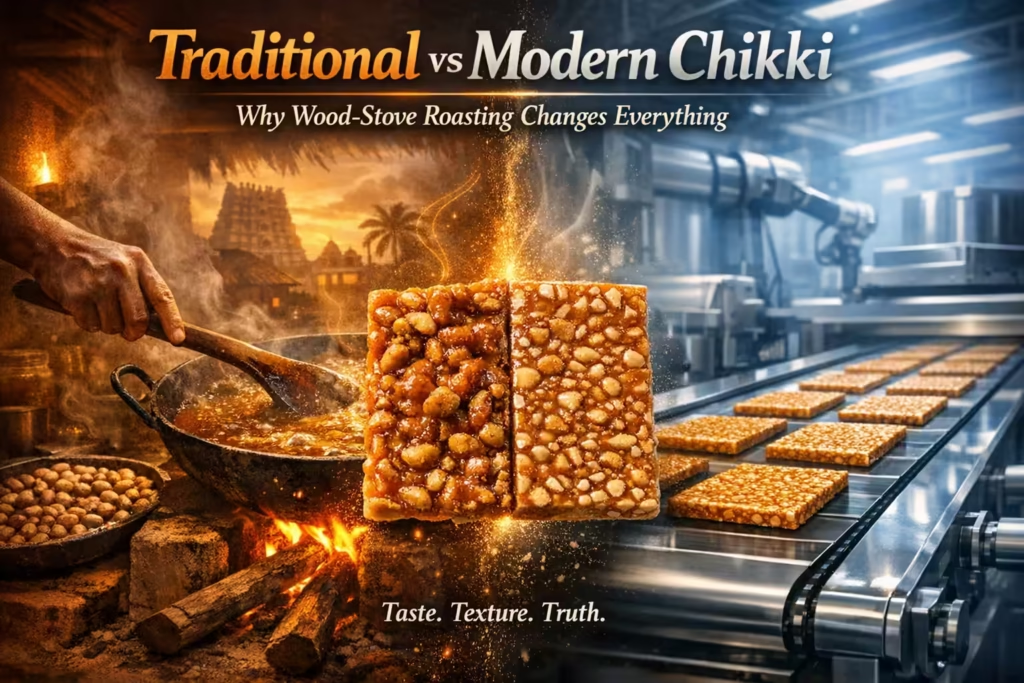
Traditional vs Modern Chikki – A Clear Comparison
| Factor | Wood-Stove Chikki | Machine-Made Chikki |
|---|---|---|
| Heat Type | Dynamic, multi-layered | Uniform |
| Flavor | Rich and layered | Flat |
| Aroma | Smoky and nutty | Minimal |
| Nutrition | Mineral-rich | Limited |
| Texture | Clean snap | Inconsistent |
| Process | Handmade | Automated |
| Authenticity | High | Reduced |
What Most People Don’t Realize
There are a few lesser-known aspects of traditional chikki that make it unique.
- Deep roasting creates melanoidins, which act as antioxidants
- Smoke compounds enhance aroma through synergy
- Slight cooking variations improve flavor diversity
- Traditional methods balance both taste and nutrition naturally
What appears as inconsistency is actually controlled complexity developed through experience.
Final Thought – It’s Not Just Chikki, It’s the Method
The difference between traditional and modern chikki is not just about ingredients, but about how those ingredients are transformed during the process. When heat becomes uniform and controlled, flavor development becomes limited, resulting in a product that feels simpler in taste.
Traditional wood-stove preparation introduces natural variation in heat, allowing multiple layers of flavor, aroma, and texture to develop within the same batch. This process relies on timing and experience rather than speed, which gives chikki its characteristic depth and identity.
While most production today focuses on efficiency, a few makers continue to follow this traditional approach. This is what keeps the original essence of kadalai mittai alive, preserving it as more than just a sweet, but as a reflection of method and craftsmanship.
For those who are curious to experience this difference in its original form, choosing chikki made using a traditional wood-stove method can offer a more authentic taste. One such approach is followed by RudrasFoods, where the focus remains on preserving this time-tested preparation style.
Explore More About Traditional Chikki
If you’re interested in going deeper into the roots and cultural significance of kadalai mittai, these articles will give you a broader understanding of its journey and legacy:
- The Story of Kovilpatti Kadalai Mittai
Discover how a small town in Tamil Nadu became known for its unique chikki-making tradition, shaped by local ingredients, skilled craftsmanship, and time-tested methods. - The History of Kadalai Mittai in Tamil Nadu
Explore how kadalai mittai evolved from a simple energy snack into a culturally significant sweet across generations, deeply connected to festivals, traditions, and local food practices.